If You Build It . . .

Iowa contractor taps 3D paving technology for high-profile interstate reconstruction.

Streb article web hero
Iowa life has been traditionally (and, perhaps, accurately) portrayed in movies as relaxed, serene, idyllic. However, there are still instances when time is of the essence and laid back is the furthest thing from one’s mind.

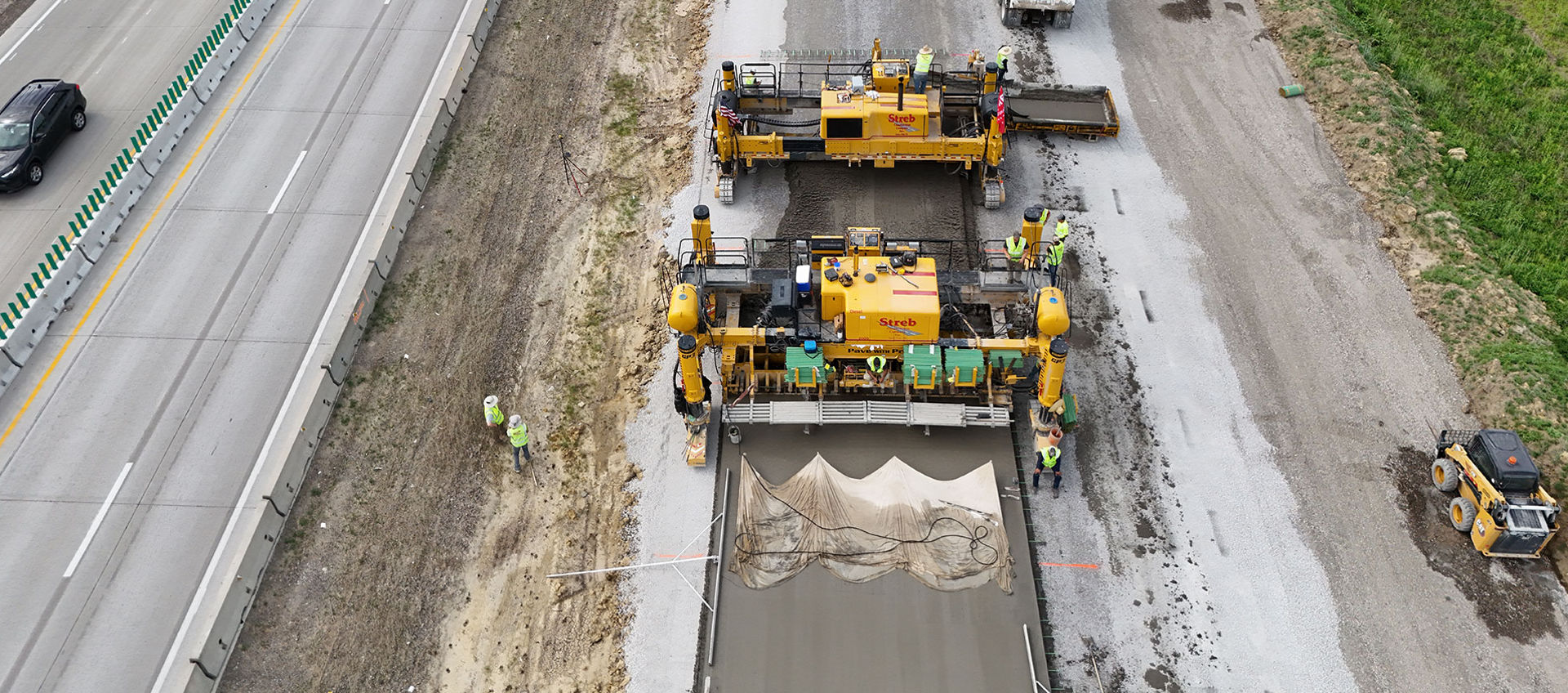
Road construction season is one of those times — an ongoing expansion of Interstate 380 (I-380) near Iowa City, Iowa, bears witness to that. There, Streb Construction is heading up work on one of three separate road segments, efforts that, when complete, will add capacity, improve safety and extend the service life of the road. Staring down a tight completion date and dealing with rains that are welcome to area farmers but a major hindrance to construction efforts, the company is utilizing 3D paving solutions that have allowed them to maintain impressive production rates while meeting stringent Iowa DOT specs. Things have gone so well, in fact, that (at the risk of overtaxing the “Field of Dreams” reference), a road contractor asking, “Is this heaven?” might be answered with, “No, this is Iowa City.” 
The Streb Story

Streb Construction is a full-service concrete flat work paving company, with specialties in subdivisions, parking lots, roadwork ranging from city streets to interstate highways, and airport paving projects. Established in Iowa City more than 60 years ago, the company has grown steadily but carefully, and today includes a sister company, E&F Paving in nearby Cedar Rapids, according to Mario Franco, one of Streb’s project managers.


“Between E&F and ourselves, we employ about 100 people,” he said. “We serve customers in and around Johnson County, essentially most of east-central Iowa. It’s a family-owned and run business and our owners are great, not only about securing good projects like this one, but also about making sure we have the tools to do the job right. It’s really been a huge part of our success.”


Streb’s commitment to the latest technology is anything but new. Franco said they have been long-time users of GPS machine control on their earthmoving equipment, specifically motor graders and dozers, and have embraced 3D paving since its inception.


“We were one of the first ones in this area with GPS technology,” he said. “I’m guessing our use of it would date back to the early- to mid-2000s. The company recognized the benefits the technology brings to the site, committed to it and has been doing so ever since. As a result, it is a key part of the current I-380 paving operation.”

Streb article web teaser image

Why-380?

When complete, the 3.4 mile long I-380 rehab will provide much-needed improvements for the 1970s-era highway, some sections of which can no longer keep pace with increasing traffic volumes and modern safety expectations. The current $300 million corridor reconstruction project, which will add one lane in either direction, is designed to help remedy those challenges. The job is being performed in three segments — north, central, and south — in order to allow minimal disruption to daily traffic flow. According to Franco, the $63 million southbound segment, is itself broken down into three separate components.

“Just to the south of our current location, near North Liberty, Peterson Contractors, Inc. (PCI) is handling all the major earthwork, drainage, and base installation,” said Franco. “Because of some questionable soil conditions, this is being done as a full-depth reclamation, so PCI is essentially removing and crushing all the existing pavement, adding to it and replacing it. Similarly, to our north, more towards Cedar Rapids, CJ Moyna & Sons Construction, the prime on the overall project, is performing dirt work in preparation for paving.”

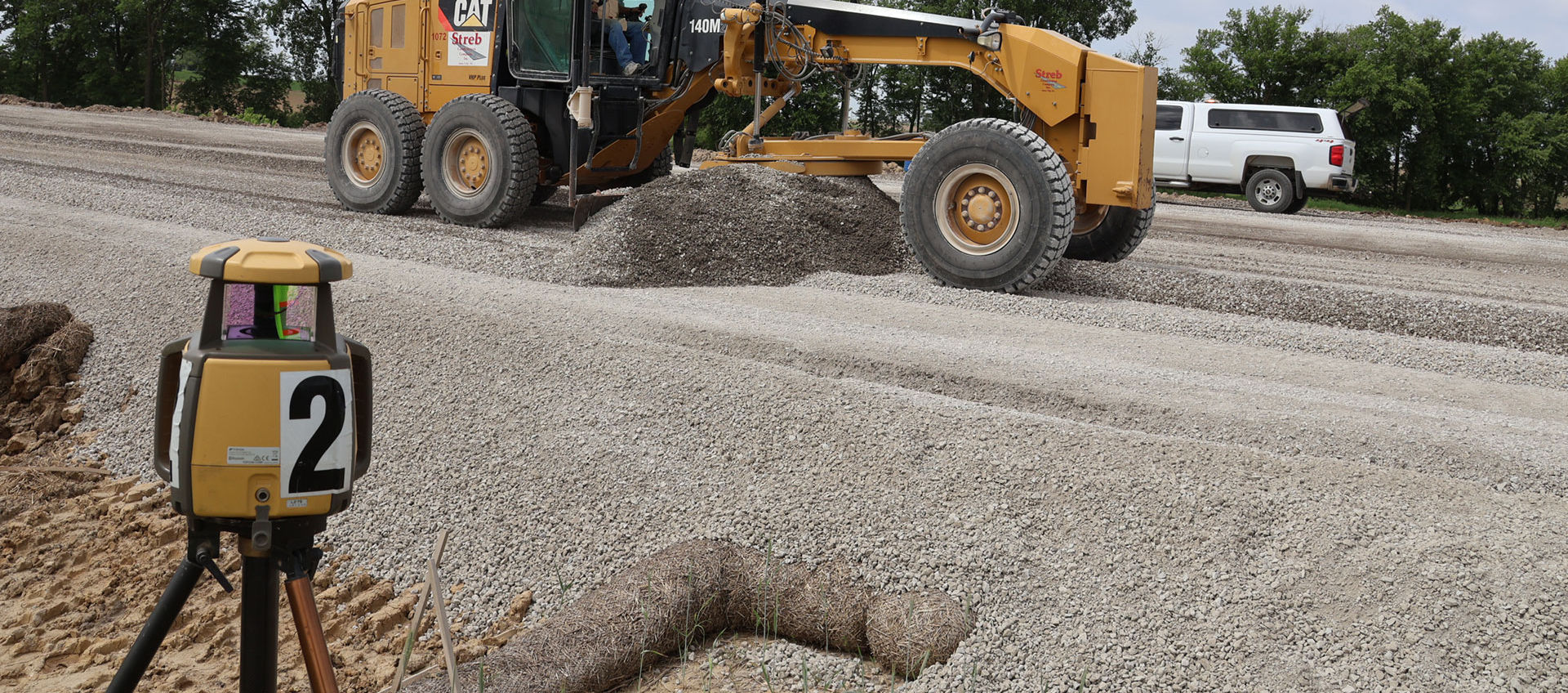
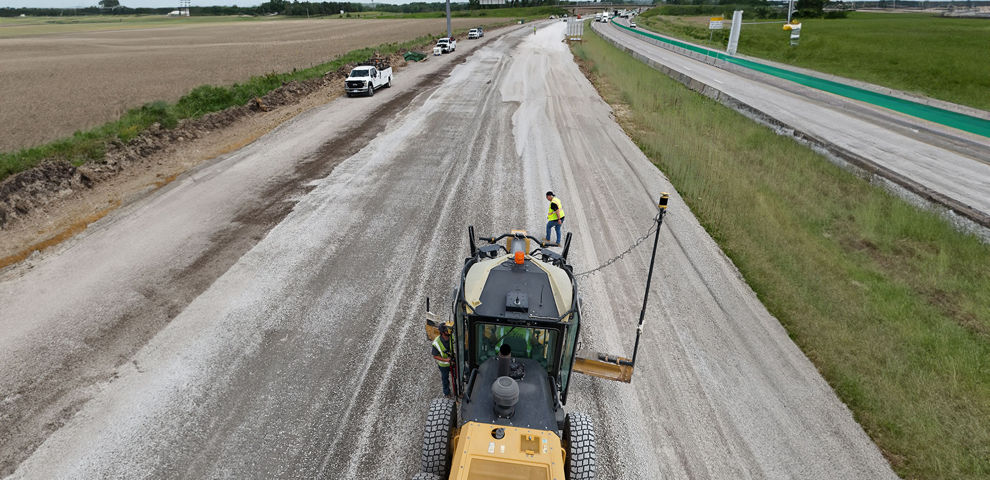
Streb’s crew comes behind each contractor with a pair of Cat 140H motor graders running Topcon MC-Max machine control for fine grading in advance of dowel basket installation and paving. “Because the specs for the project are very tight, having that 3D GPS component in place for the fine grade has been ideal.”

"Because the specs for the project are very tight, having that 3D GPS component in place for the fine grade has been ideal."

Dealing With Challenges

Since kicking off, I-380 project has been progressing nicely, and Franco is confident that they will meet their eight-month deadline. It has not been without its challenges, however, most of which center around logistics.


“The location for this project is probably the biggest issue,” he said. “Because of where it is situated, our concrete trucks have to load up at our Iowa City batch plant, drive west on I-80, go five miles northward on I-380 past the job site, exit the highway, get back onto I-380 southbound, then turn off into the project. Adding ten miles of drive time to each truck is impactful but there is simply no other way to do it.”


He said they and Iowa DOT discussed creating an access road which could have shortened that process considerably, but it would have meant cutting across some private property to make it happen which was simply not feasible. “But we are making the current situation work just fine,” he added.


In addition to adding the travel time and mileage, Streb is also required to cease truck operations for two, one-hour periods daily — again, to take the stress off rush-hour commuters. “We are not allowed to have our trucks on I-380 between 7 a.m. and 8 a.m. and again between 4 p.m. and 5 p.m.,” said Franco. “That knocks a full two hours off our daily productivity but we’re making that work as well.”

Streb article web teaser image

"The process is faster — I would say close to 40% faster — than a traditional stringline approach.”

Not Stringing Along

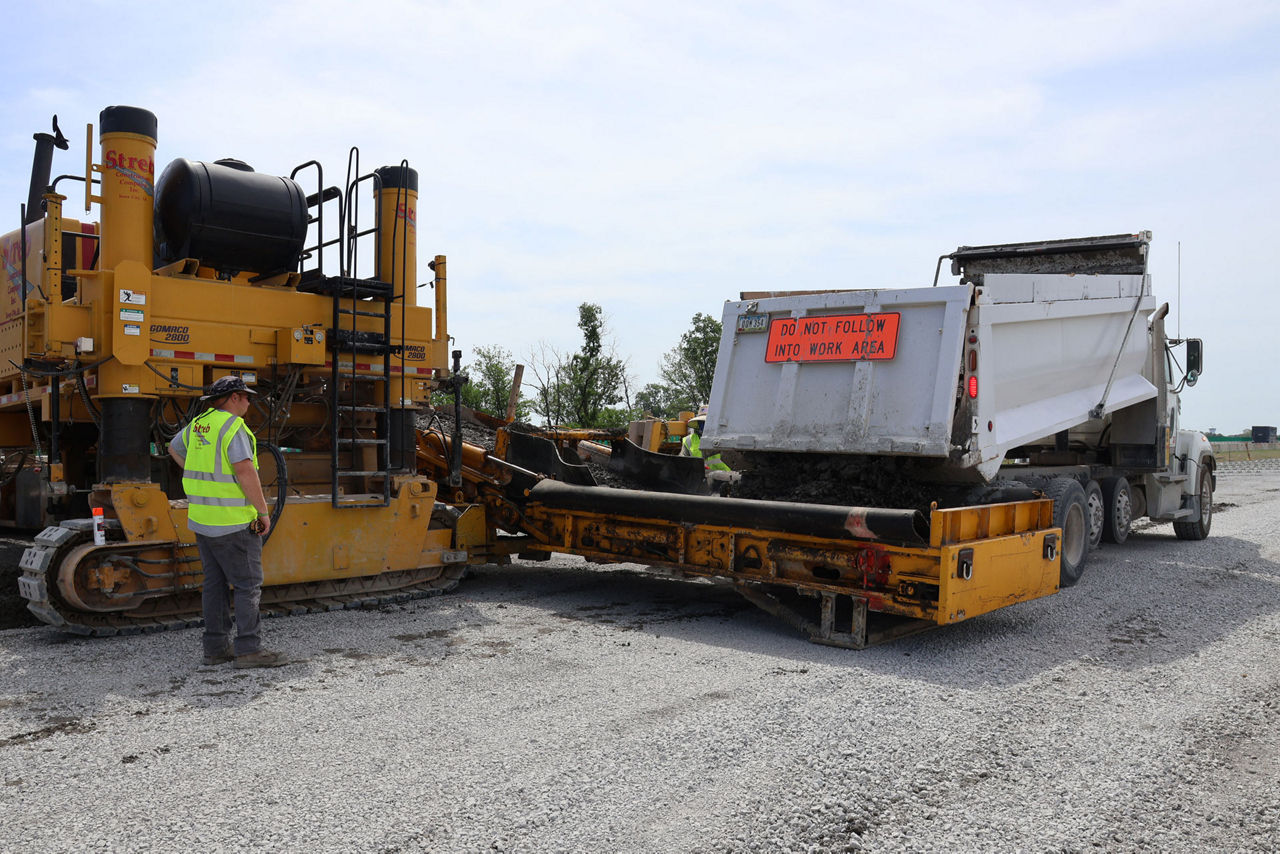
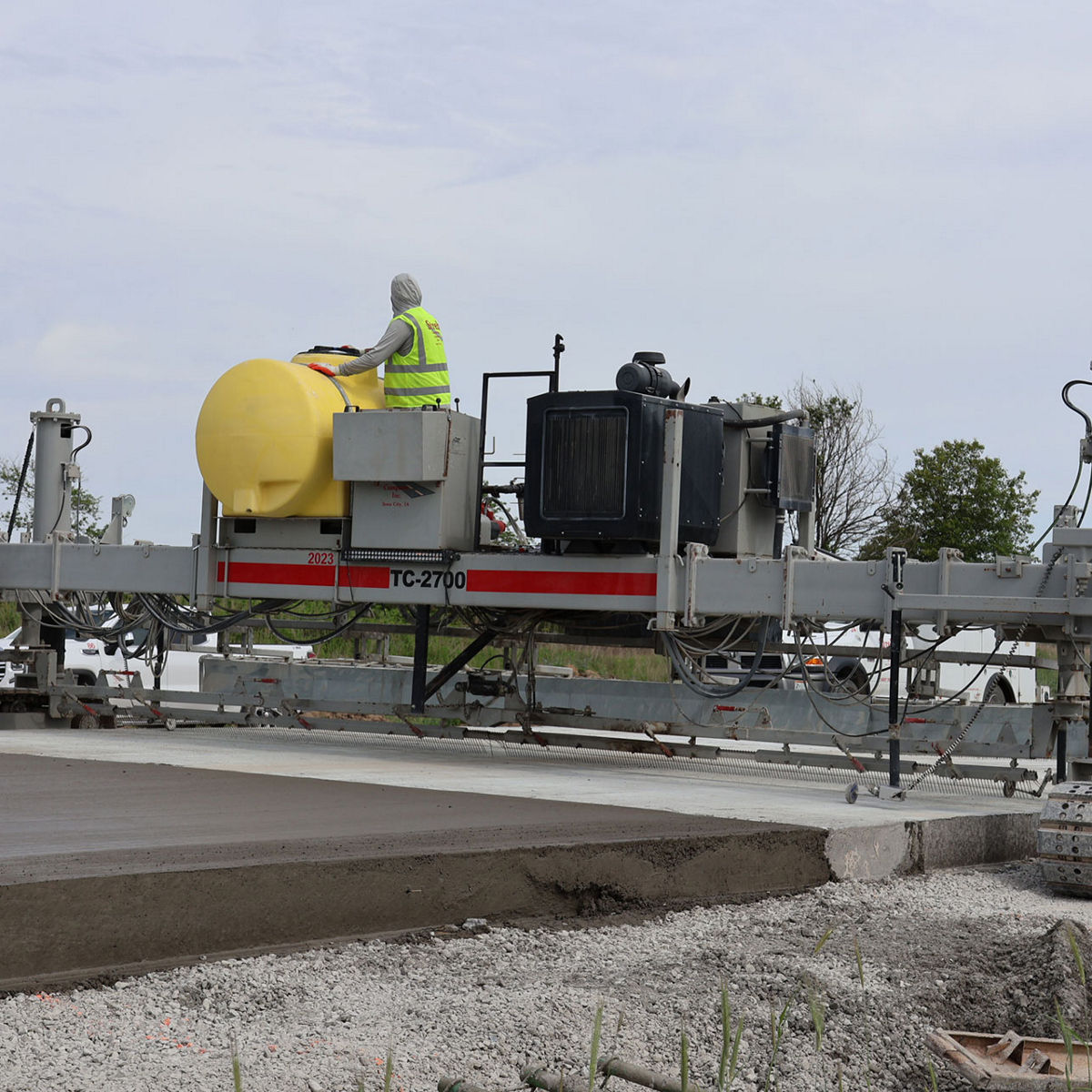
Streb believes that the surest way to offset such challenges to productivity is by maximizing onsite performance. Their use of end-dumps — between 15 and 20 at any given time — rather than standard ready-mix trucks attests to that. For highway work, particularly when a spreader is used, the company feels end-dumps make the concrete loading and unloading process faster and more efficient. Similarly, they’ve chosen to streamline the paving workflow, bypassing traditional stringline in favor of a 3D-driven paving approach.


“Streb has been using Topcon paving solutions for a long time,” said Franco. “For this project, because of Iowa DOT’s strict smoothness criteria, we are using a Topcon LPS solution for the bulk of the work. But there are some parts of the project, ramps for example, in which we will switch to Millimeter GPS. It’s great to have the ability to draw upon both systems.”


He added that using 3D is also a plus from an estimating perspective. “The labor involved in setting up and taking down a stringline can be substantial,” he said. “That’s all been eliminated. Now, once things are fine-graded and the dowel baskets are down, all we do is show up, verify our control points and get paving.”

Streb article web teaser image

Robotic Progress

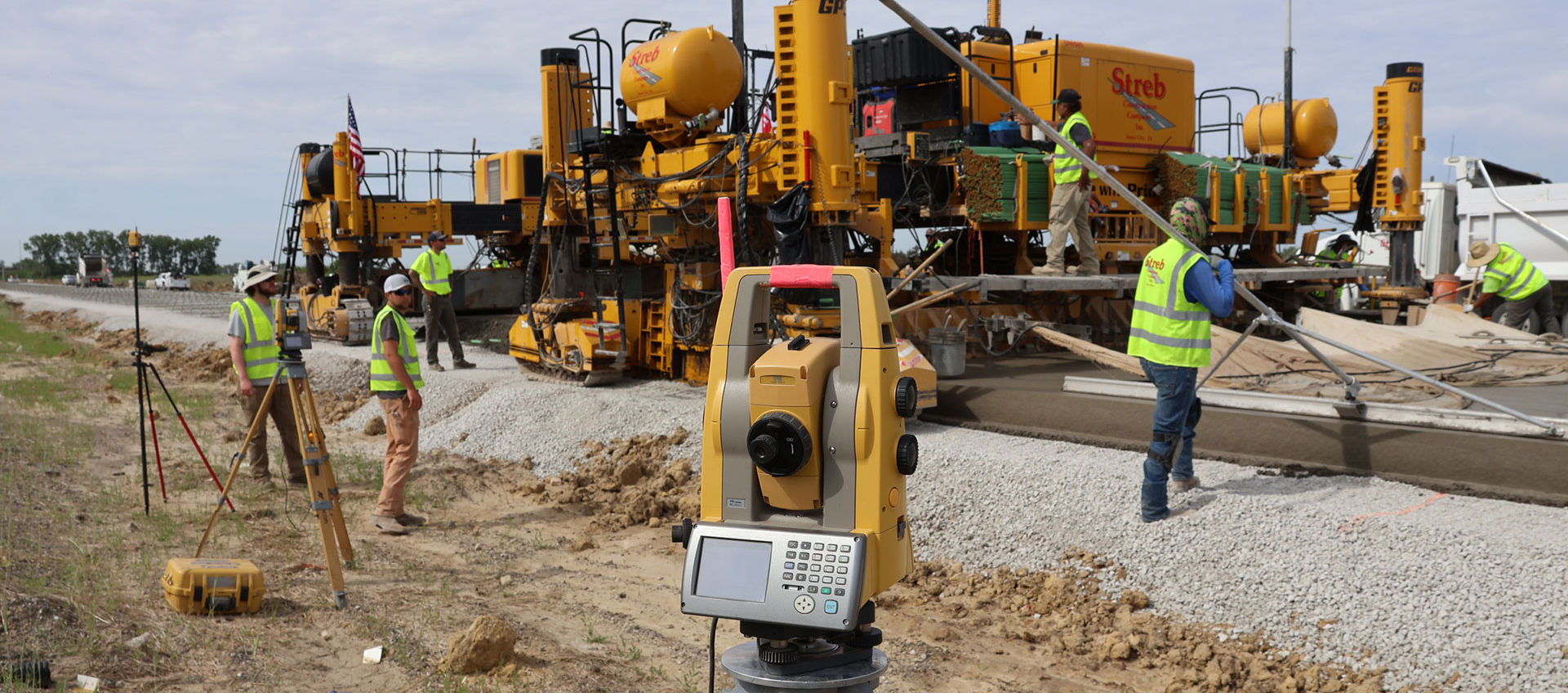
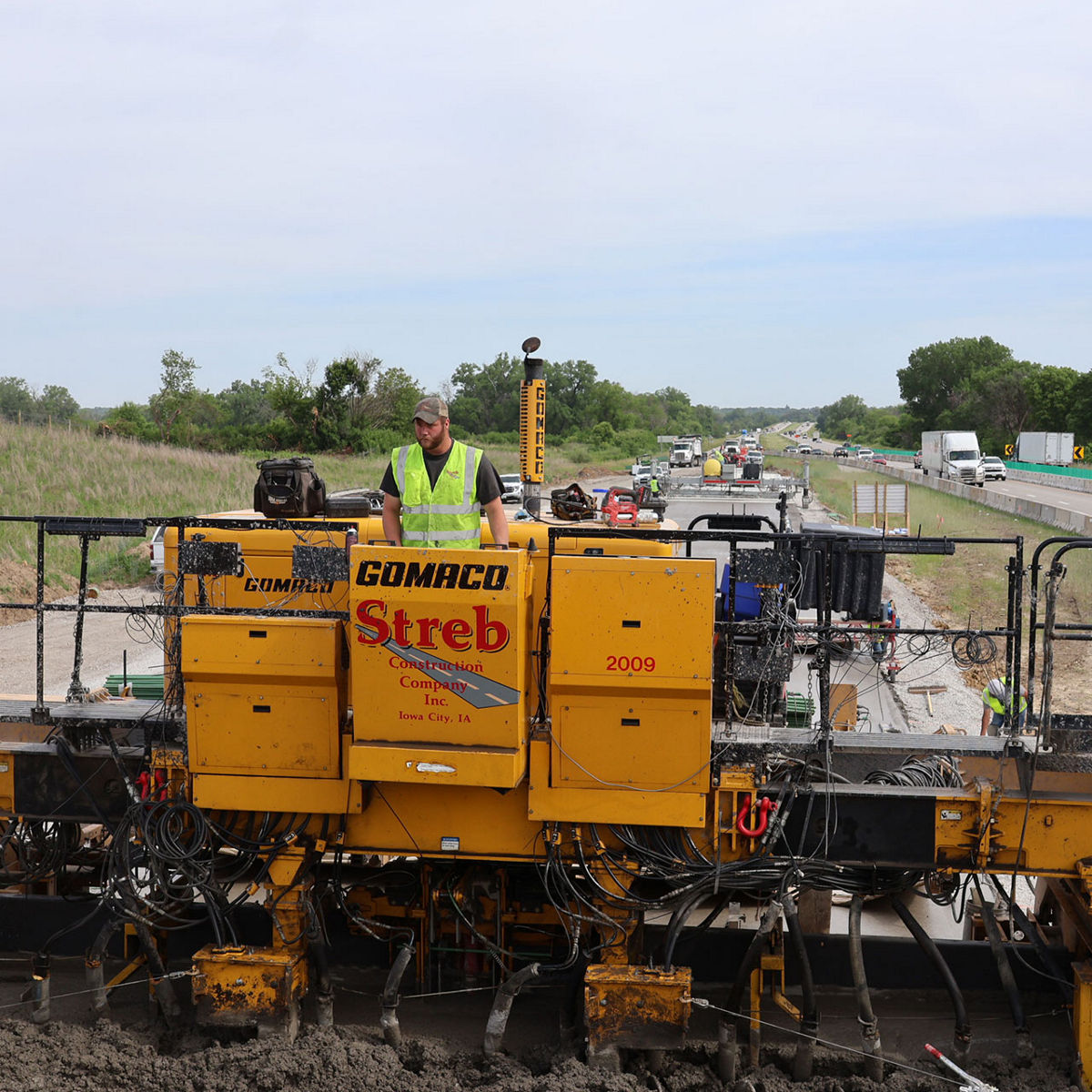
The LPS paving system to which Franco refers uses a series of robotic total stations to track prisms mounted directly on their Gomaco GP3 paver, ensuring high-accuracy elevation and steering information to the unit. Franco said they are using both Topcon GT and PS series robots on the I-380 job.

“We have three robots spaced roughly 250’ to 300’ apart and leapfrog them as paving progresses southward,” he said. “Those robots transmit elevation and position data to the sensors, ensuring accuracies are maintained. The process is faster — I would say close to 40% faster — than a traditional stringline approach. Plus, because there is no risk of the stringline being hit by either a truck or a worker, production remains constant. We use 3D, whether its GPS or LPS, whenever possible.”

On the production front, Franco said that, in spite of the frequent rain delays, they are still trying to maintain a rate of 2,200 feet a day, which they averaged last year on the northbound side of I-380. “That’s 1,800 cubic yards of concrete placed per day,” he added. “Our best production day last year was 2,600 feet or 2,100 cubic yards of mud put down in a single day. There’s no doubt the automated solutions we use out here keep things moving along and will be key in us finishing on time.”

Streb’s portion of the I-380 project will wrap up in November of this year, with a full project completion date set for spring of 2027.

"There’s no doubt the automated solutions we use out here keep things moving along and will be key in us finishing on time.”