Success from the Blue Line

An array of monitoring instruments will help minimize impact from Montreal’s newest Metro expansion.

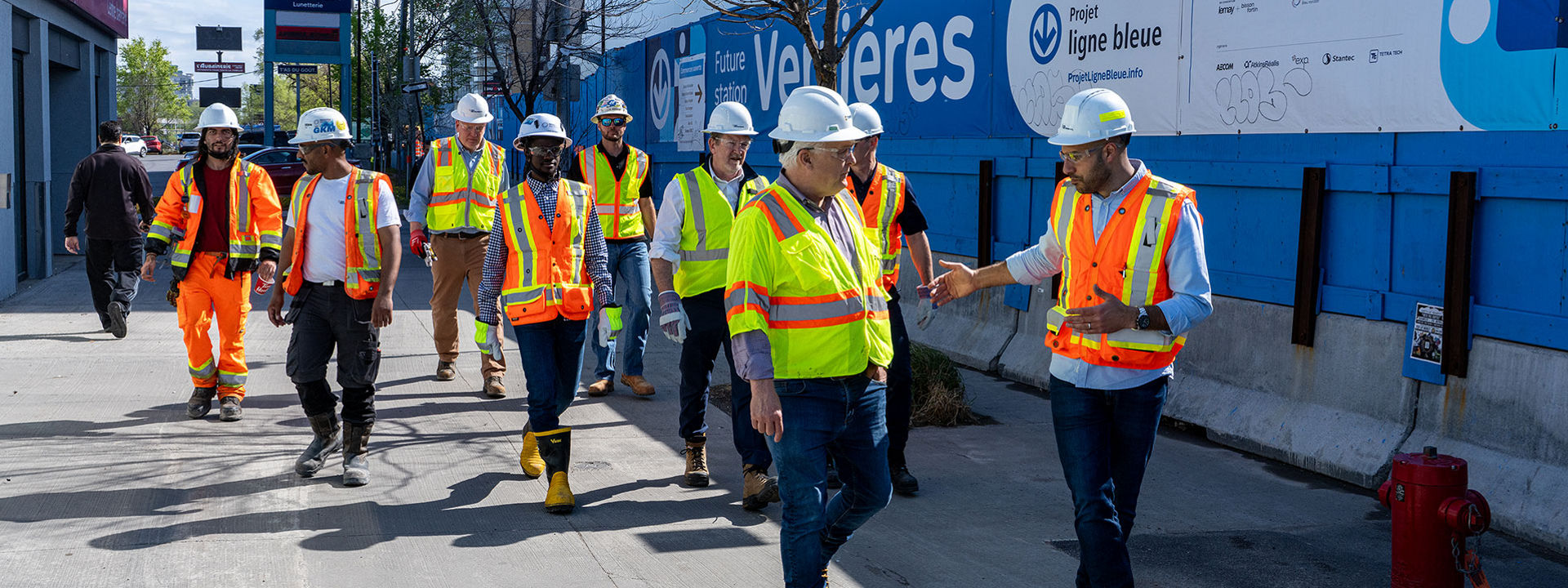
Topcon Blue Line Site Visit Montreal Hero Image
While much of Montreal was supporting the Montreal Canadiens, its storied NHL team, as it navigated the post-season, a mammoth undertaking was kicking off beneath their very feet.

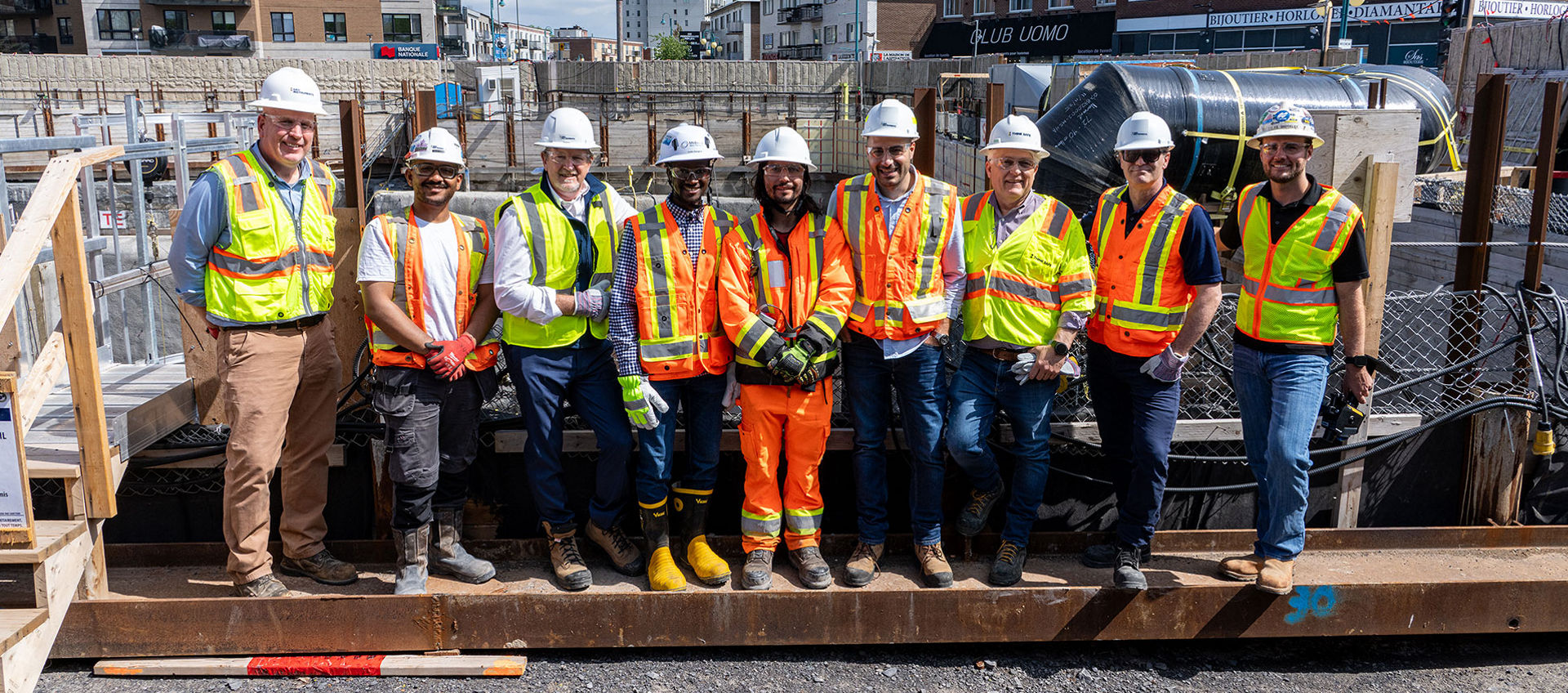
In the city’s east end, a group of civic and provincial dignitaries, along with representatives from Société de transport de Montréal (STM), the city’s transit organization and Mobilité Bleu Horizon (MBH), a consortium of global construction firms, celebrated the inaugural launch of a tunnel boring machine (TBM). The unit will be the key component in the expansion of the Metro’s Blue Line, most of which will run directly under many sensitive structures and utilities. To alleviate the risk of damage to those assets and help bolster safety for the tunneling crew, a team from GEO-Instruments has installed a comprehensive solution consisting of both above- and in-ground instruments designed to monitor, measure and report on issues such as surface settlement, ground movement, and structural integrity of adjacent buildings. By doing so, they’ve ensured that (to paraphrase a popular idiom), “What happens below ground, stays below ground.”
Progress Abounds

The expansion of the Blue Line should come as no surprise, given the positive economic climate and vibrant growth taking place in the city. A spate of new high-rise condos, a new museum of contemporary art, renovation of the Olympic stadium, the construction of the new light rail (REM) to the Trudeau International Airport, and an embrace of green urban initiatives all point toward a city for which progress is commonplace.


That same commitment to forward thinking is also at the heart of the Metro’s extension. The expansion will provide residents of previously underserved east-end neighborhoods with public transportation choices beyond buses, while improving access to the Metro for tens of thousands of additional riders. Other benefits include reduced pressure on parallel bus routes and transfer points, as well as  economic development in the areas served by the extension.


“In addition to redefining mobility in the east end of the city, the extended Blue Line will also densify residential development around the five future stations,” said Karine Boivin Roy, minister responsible for housing. “I am particularly pleased that several thousand new mixed housing units will be coming out of the ground over the next few years. Ultimately, the new urban environment will provide a greener and more accessible place to live.” 

Topcon Blue Line Site Visit Montreal Web 08

Activity Below

While tunneling as much as 40 meters directly below Canada’s second most populous city is an immense challenge, those concerns are largely mitigated by combining the best skills in the business with the latest technology. Excavation of the main shafts and tunnel is being handled by the MBH consortium. The group consists of Canadian construction firm Pomerleau, the Montreal office of general contractor EBC, Inc., and French construction/civil engineering group Spie batignolles.

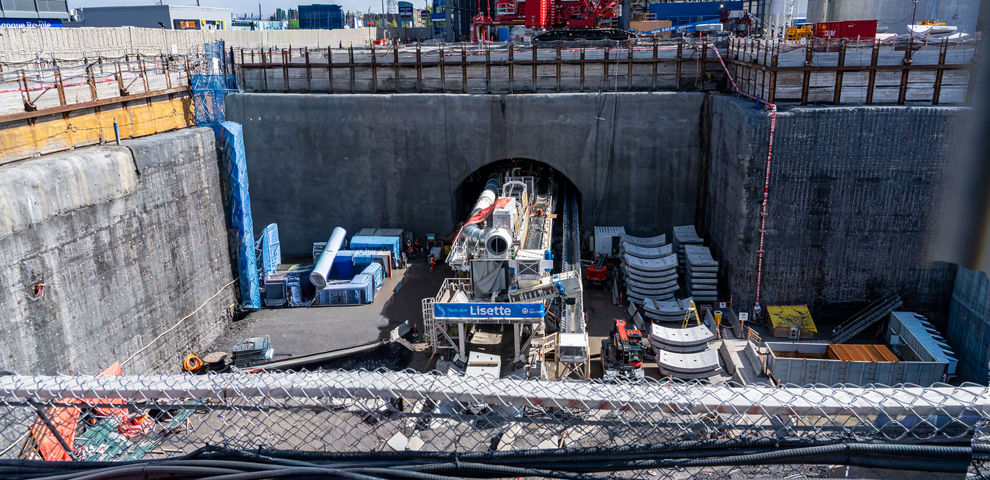
On the equipment side, the Herrenknecht TBM (named Lisette to honor Lisette StOnge, Montreal Metro’s first female operator), is a modern marvel that epitomizes the adoption of technology. Clocking in at more than 130 meters in length and weighing 2,200 tons, the machine will excavate the 9.7-meter-wide tunnel while simultaneously disposing of 600,000 tons of rock and installing the 14,300 pre-cast concrete segments that will make up the structure’s walls.

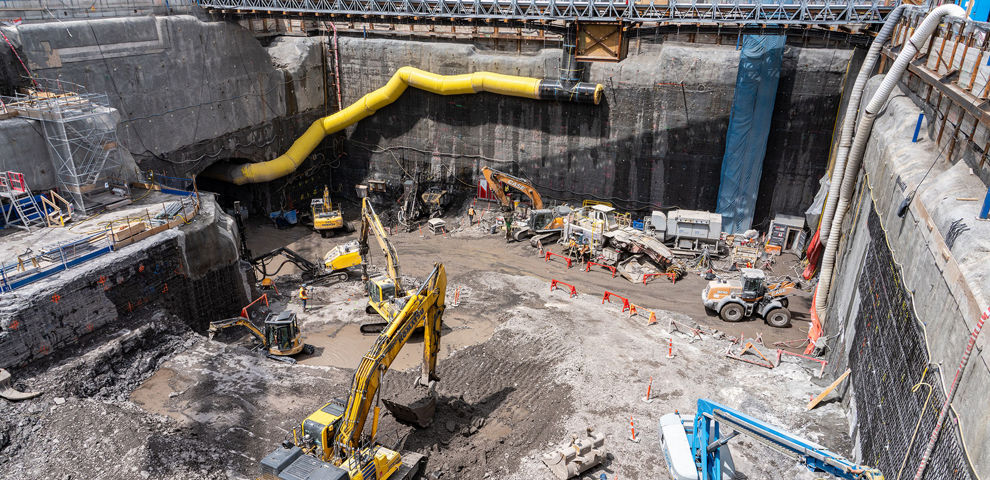
In addition to the massive excavation needed for the assembly and launch of the TBM, four other sites along the route that will be station stops on the new line have already been excavated. 

“In addition to redefining mobility in the east end of the city, the extended Blue Line will also densify residential development around the five future stations.”

— Karine Boivin Roy

We’re Watching

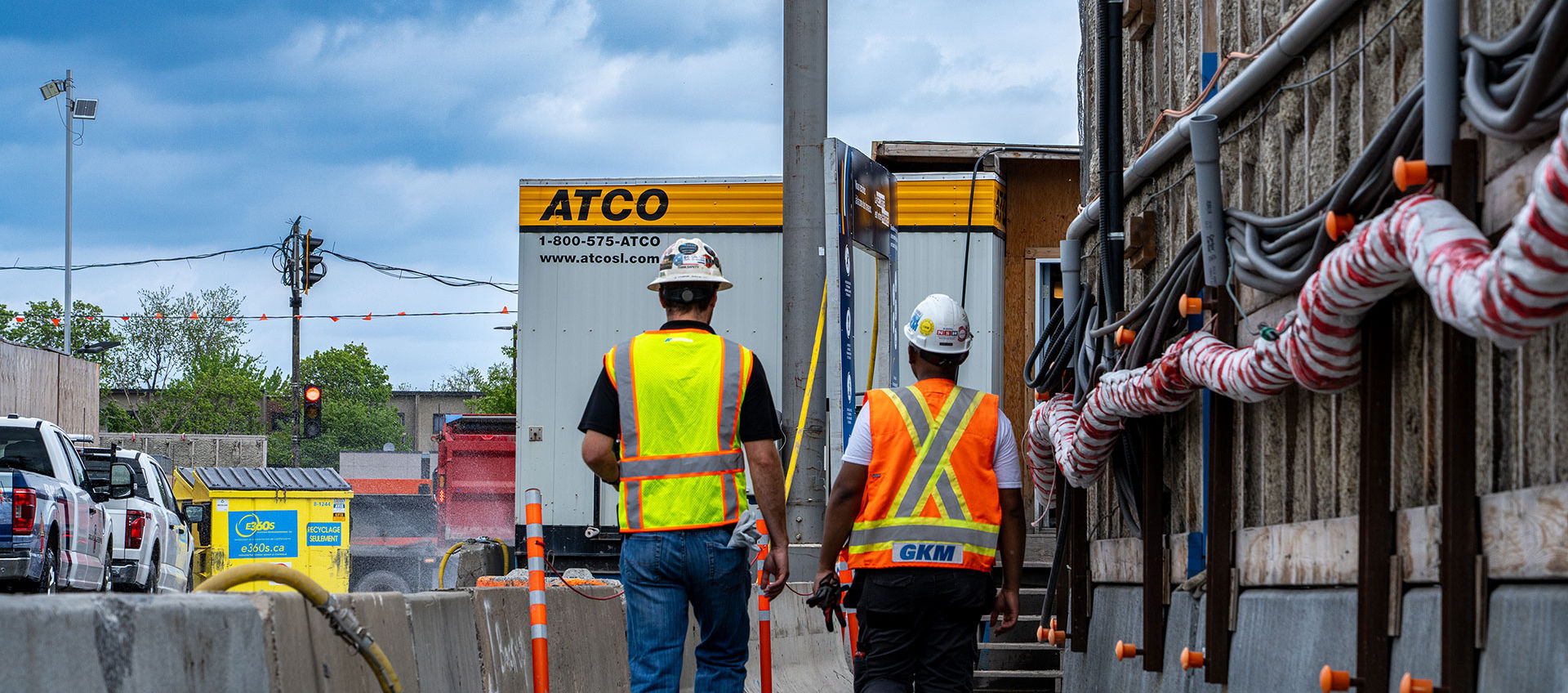
The task of ensuring that the tunneling process is not adversely affecting life at the surface is shared between MBH and and the Montreal branch of GEO-Instruments, a company with extensive experience in instrumentation, information technology, civil engineering, and construction. Having a proven level of expertise in tunneling work, the project was an ideal fit for the company’s expertise, according to GEO’s president, Stéphane-Éric Thivierge.


“We recently wrapped up a similar project for the Toronto Transit Commission,” he said. “And, while there are a lot of similarities between the two, there were also a world of differences such as geology, solutions in use, our partners’ approach to the work, etc. We took what we learned on that job and used it to increase our knowledge base and anticipate any potential challenges.”


The scope of work GEO-Instruments will be providing is broad and covers both underground and above-ground requirements. “For any project, we apply a solution-agnostic philosophy, selecting technologies strictly based on performance and project compliance,” said Thivierge. “We are not tied to any particular solution, instead, choosing the right tool from a variety of agreements with key manufacturers, understanding the strengths of each tool, and knowing how they can best contribute to the success of the project.” 

Topcon Blue Line Site Visit Montreal Web 06

“We used the Topcon MS series robots on the Toronto project and, based on the success we had there, knew we wanted to use them here in Montreal.”

— Derick Kouévi

Station to Station

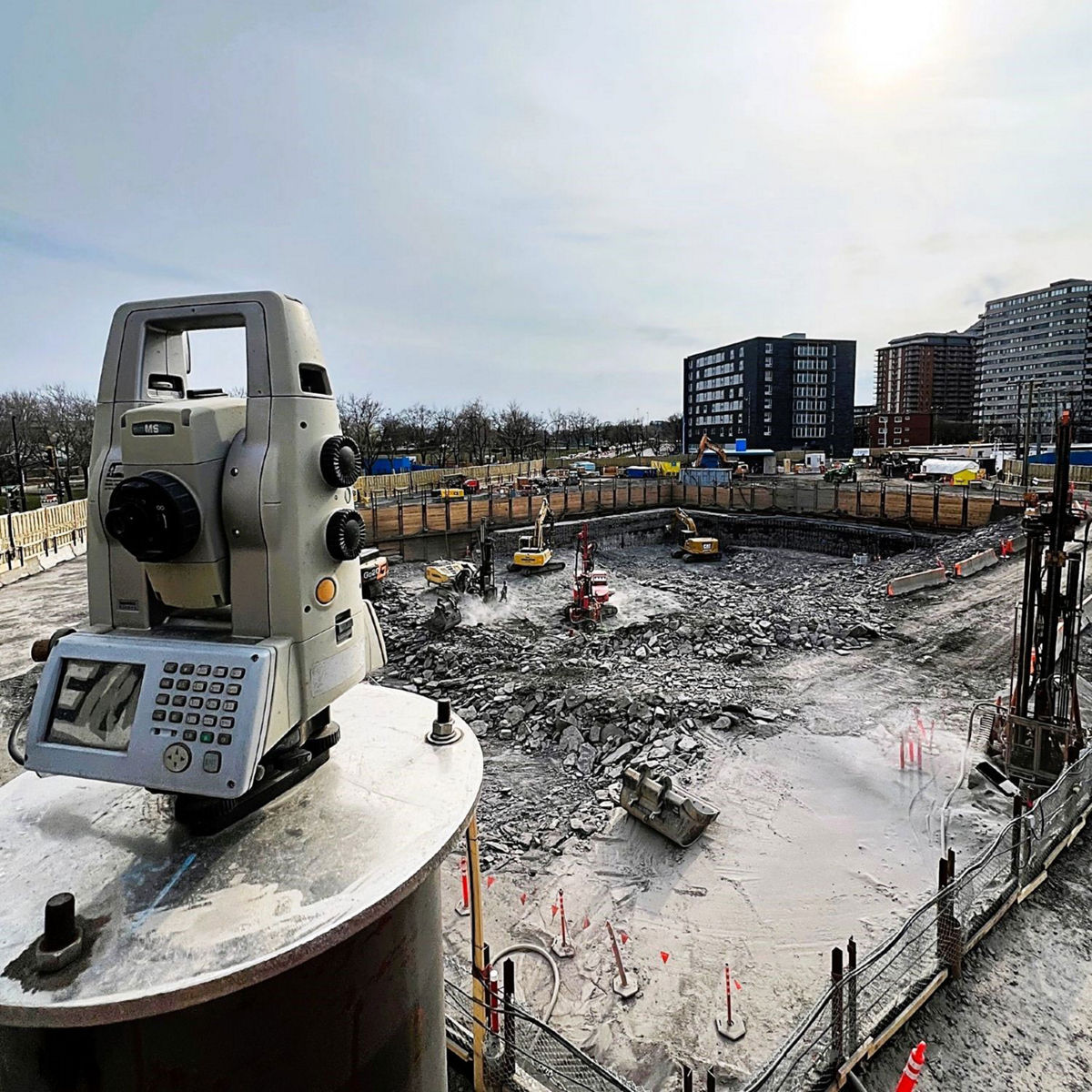
GEO-Instruments’ key monitoring techniques include the initial deployment of 14 Topcon MS AXII units for monitoring above-ground structures across all influence zones. The Topcon MS (measuring station) series is designed for precision-intensive tasks such as monitoring, bridge construction, and other highly detailed engineering projects. Also employed are in-ground deformation measurement instruments of various types, including inclinometers to measure changes in slope; extensometers to measure underground mass displacement; piezometers, to monitor underground water pressure; Underground Mounting Points (UMPs) to monitor movement of individual utilities; and manual optical monitoring for periodic verification.

Many of the measuring station instruments that GEO-Instruments has in place have been at work for more than a year now at the sites of future Metro stations. There, they monitor the displacement and deformation of structures and provide precise measurement of movements in three dimensions, enabling engineers to track and be alerted to changes in real time.

“The total station network will grow in size — and importance — as the TBM progresses along its 4.6-kilometer route and the five new station stops are created,” said Hassan Daoud, GEO-Instruments’ area manager for Eastern Canada. “Our services there draw upon the entire scope of our expertise and include procurement and project management, drilling coordination, on-site supervision, instrument installation, system commissioning, and real-time data acquisition with online dashboards.”

Simply Accurate

Topcon monitoring solutions are a core part of GEO-Instruments' overall system. They serve a fairly straightforward purpose: to detect even the smallest movement or deviation and report on that change. According to Derick Kouévi, GEO-Instruments’ project manager for instrumentation, by the project’s peak, their team plans to employ as many as 20 MS instruments for both manual and automatic measuring.


“We used the Topcon MS series robots on the Toronto project and, based on the success we had there, knew we wanted to use them here in Montreal,” he said. “We like the accuracy and repeatability of the instrument as well as its ease of use. Once the total station is installed, it's simply a matter of installing the prisms and begin the monitoring process. Remote operation is also a plus for us; we are able to aim at any point or do some troubleshooting remotely and if a client calls saying they want to confirm something, we can just access the appropriate total station and provide the data.”


The remote functionality Kouévi mentions is enabled by the Topcon Delta Link solution. Delta Link is a ruggedized field control unit that provides autonomous operation, remote communication, local data backup, continuous data transfer, and system diagnostic tools for total stations installed permanently in the field. 

Topcon Blue Line Site Visit Montreal Web 07

Target Shooting

Kouévi said they installed their first total station last year and now have 14 units active and transmitting data, with five additional units slated for future use to identify and record any above-ground activity as the TBM’s progress continues. “The targets for the instruments are mainly located on buildings, but we also have some in the excavation to monitor the health of the shoring walls. The number of targets varies; we have some installations with only 15 but have others where we have dozens. In one location we have four total stations in a joint network monitoring more than 100 prisms right now. It’s a dynamic process.”

He added that they generally take shots every 15 minutes and then, using Delta  Watch, Topcon’s processing and analysis software, average those readings every hour or two.  

Topcon MS total stations are capable of sub-millimeter-level accuracy measurements. Combining Topcon’s Delta Link field controller and Delta Watch delivers data to the project team in a timely manner. If unanticipated movement occurs, the project team is informed to proactively mitigate any associated risks.

“We are in the earlier stages of the project right now and will be monitoring until tunneling ends in 2028,” said Kouévi. “Things are progressing nicely and will undoubtedly evolve as the project progresses, but we’ve been very pleased with how things have gone up to this point.”

The Blue Line extension is slated for a 2031 opening.

Related articles