From the days of the first U.S. men in space, to the Apollo program which landed man on the moon, to the 135 launches of the shuttle program, pictures and video of a rocket being moved from its assembly building to the launch pad at Kennedy Space Center have never failed to impress. While the focus is generally on the massive mobile crawler/launch platform and the payload they are carrying, there’s no denying that the crawlerway on which they travel played a huge role in the success of any of those missions. Without its ability to withstand weights in the tens of millions of pounds — and do so with only a miniscule deviation in attitude — the move could not be achieved. So, when NASA and the Kennedy Space Center decided to self-perform maintenance of that crawlerway, their expressed need was simple: “a road grader and associated guidance equipment.” That request, however, meant that the new maintenance team charged with that task needed to acquire familiarity with the machine as well as some solid total station knowledge and LPS-based machine control skills. Making that happen was a collaborative effort between key organizations, leading to an assurance that the crawlerway will be in better shape than ever. Not just the right stuff — the perfect stuff.
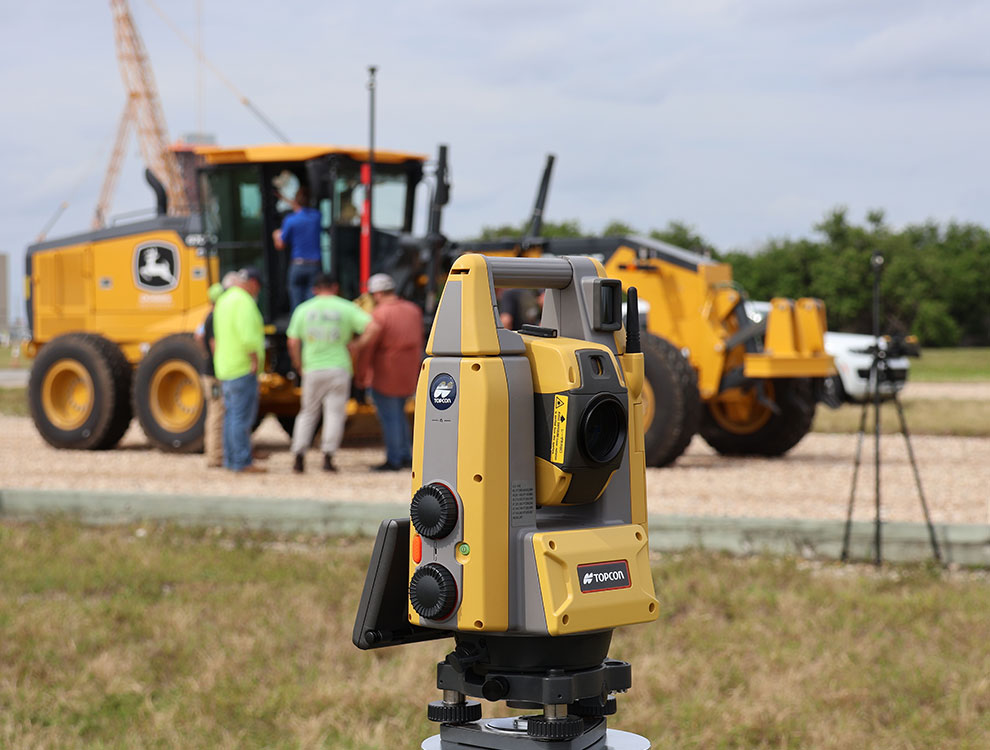
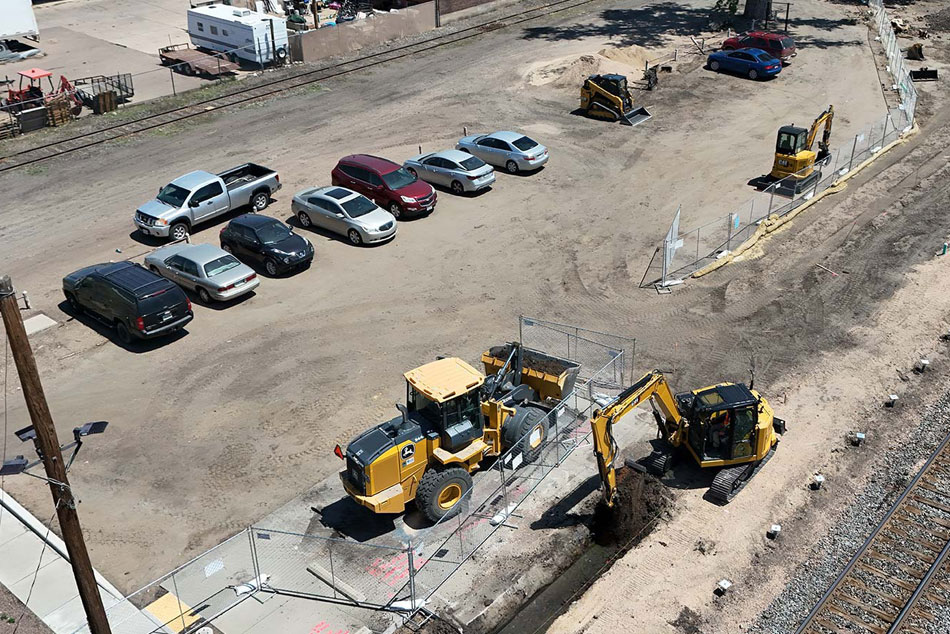
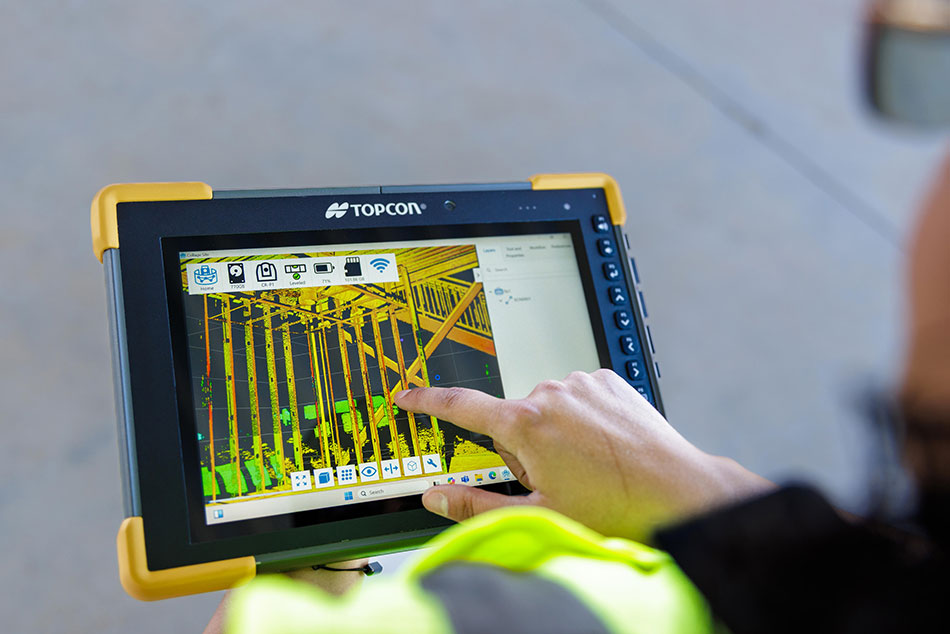
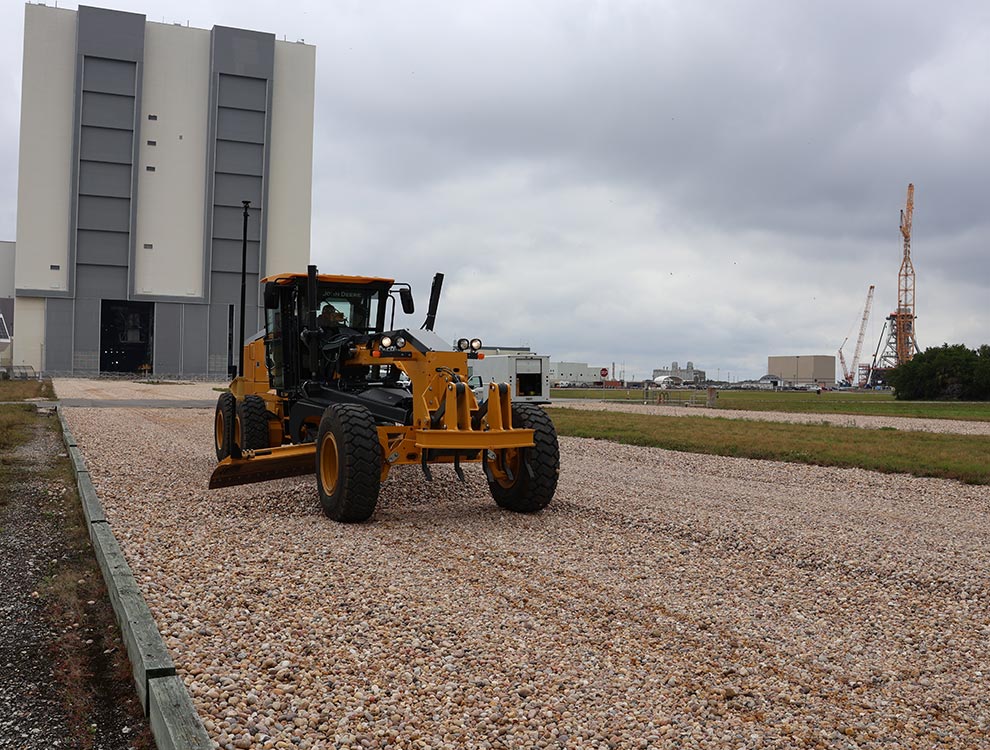
The choice of whom to partner with was made much simpler by the years-long relationship Topcon enjoys with Dobbs Equipment, an Orlando-based John Deere dealer with branches throughout the southeast U.S. According to Roger Croft, Dobbs’ general manager, after some back-and-forth discussions, working through the General Services Administration (GSA), they presented NASA with a bid consisting of a John Deere 670 GP motor grader and Topcon GTS 1201 robotic total station to provide the necessary LPS machine control solution.
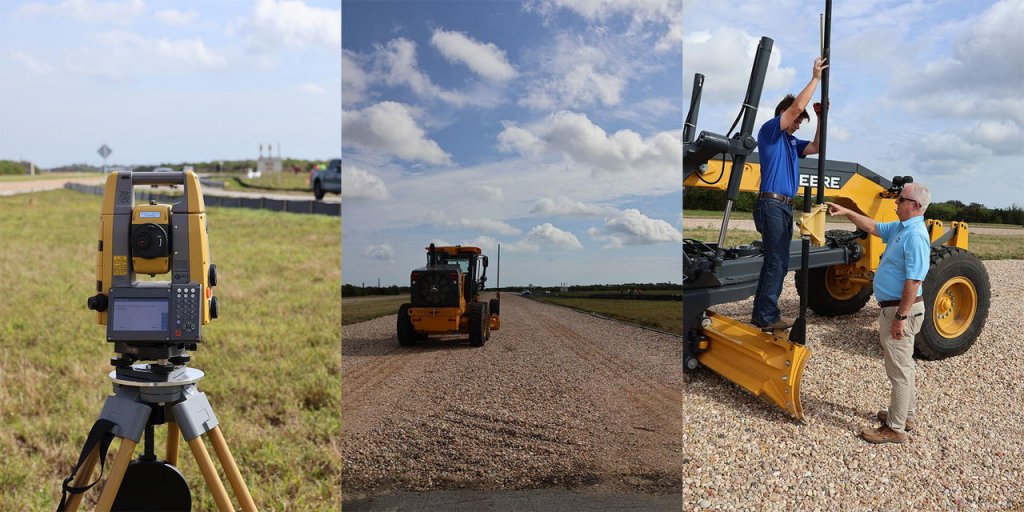
- image 1
- image 2
- image 3
New to the Game
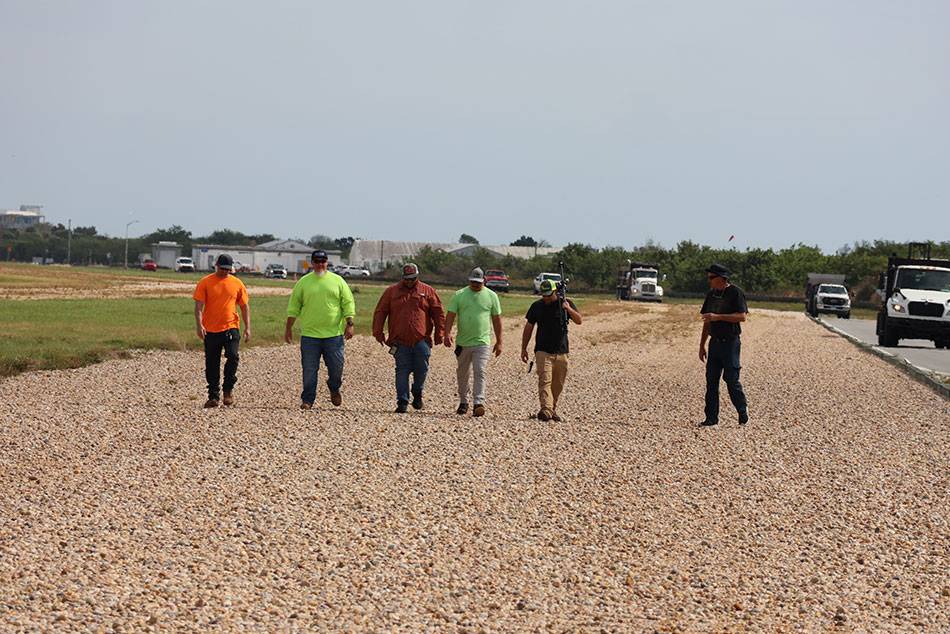
The crawlerway around which all this effort center, is a 4.2 mile long path that connects NASA’s Vehicle Assembly Building (where rockets are assembled atop a mobile launch platform) with Launch Pads 39A and 39B. Designed to support the mobile crawler and its varied payloads, it consists of a pair of 40’-wide lanes separated by a 50’ median. Despite its mission-critical role, the new team charged with maintaining the crawlerway — a task that calls for a full grading to tight, unforgiving, accuracies — had virtually no grading experience.
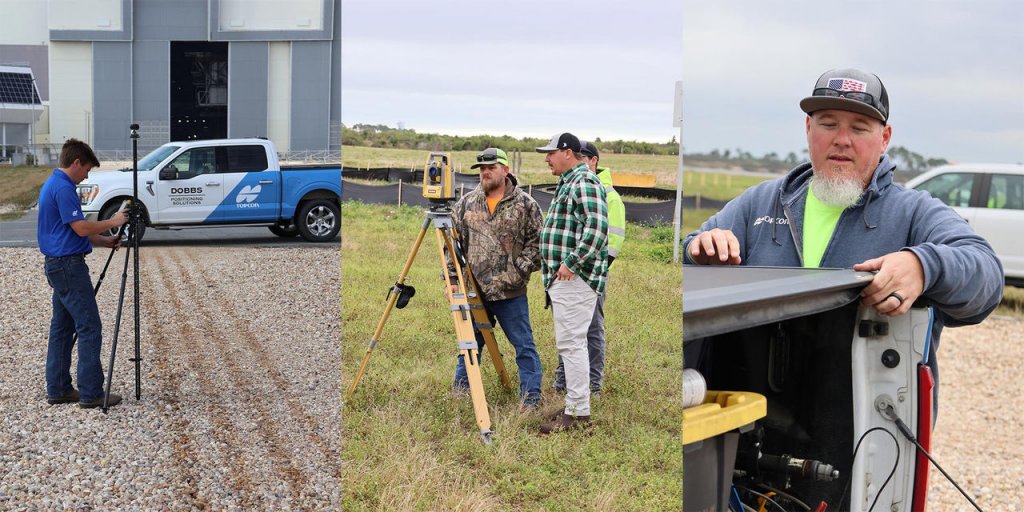
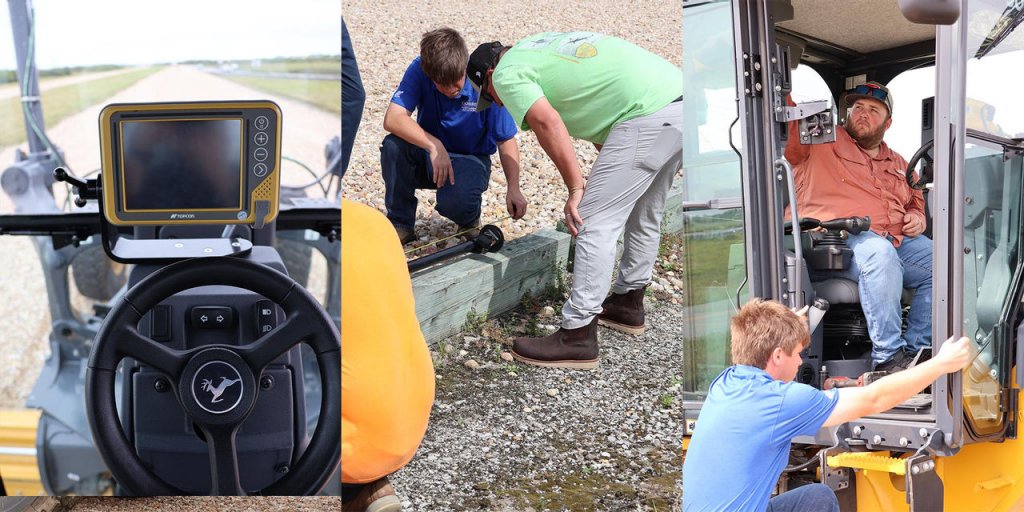
“Because this was all new to the operators, there was a good deal of training needed, and that aspect was handled jointly by Topcon and Dobbs,” said Croft. “Topcon sent Mike Gosnell, one of its application specialists whose forte is instruction on Millimeter GPS and LPS. And Jack Miller from our office worked alongside him to help familiarize the new crew with the John Deere 670 grader.”
According to Topcon’s Gosnell, the crew of operators took to the training surprisingly well. “These guys are crane operators by trade and not familiar with earthmoving of any kind,” he said. “So they came into this with no GPS experience, no familiarity with machine control, no real knowledge of 3D technology in general. Despite that, they did great. I’d like to think it's a reflection of the thoroughness of my training, but I think it’s more that they're smarter than the average worker, and Topcon and Deere design their technology for user-friendliness. Different members of the crew seemed to embrace different facets of the training, with some really excelling at the machine operation while others took to the LPS side of things and the total station setup. Together, I’m confident that they will have the entire grading process down nicely.”
“More than simply a chance to provide a solution to NASA, this project was a great example of the value we place in OEM support; a commitment that’s at the heart of who we are as a company.”
— Curtiss Dorr
“There’s little denying the satisfaction we have in knowing that, with every rocket that rolls out of the VAB toward the launch pad, our technology will be contributing to the success of that launch.”
— Curtiss Dorr
Solutions Available
Looking at the KSC experience as a whole, Topcon’s Dorr said that the outcome was valuable in ways that are not obvious but will reap benefits long after the sale.
“More than simply a chance to provide a solution to NASA, this project was a great example of the value we place in OEM support; a commitment that’s at the heart of who we are as a company. When an OEM gets an opportunity to quote a machine with technology that is not in their toolbox but is definitely in ours — in this case the GT-1201 robotic total station — we want them to know that they can contact our team for the ideal digital construction technology solution — and that we will back it with the necessary expert training/support.”
The fact that Topcon was able to play a pivotal role in such a key project was not lost on Dorr or Topcon. “There’s little denying the satisfaction we have in knowing that, with every rocket that rolls out of the VAB toward the launch pad, our technology will be contributing to the success of that launch,” he said. “We’re sure that Roger and his team at Dobbs, the new operators, the governmental team at John Deere, etc., share in that pride. All the science aside, a rocket launch is, at its heart, a collaborative effort. It’s only fitting that our contribution to the space program was as well.”