Looking for your apps? Click the account icon in the upper right corner of the page.

Barn in the U.S.A.

Hero Image

True Concrete Solutions taps GPS technology on massive dairy farm pour.
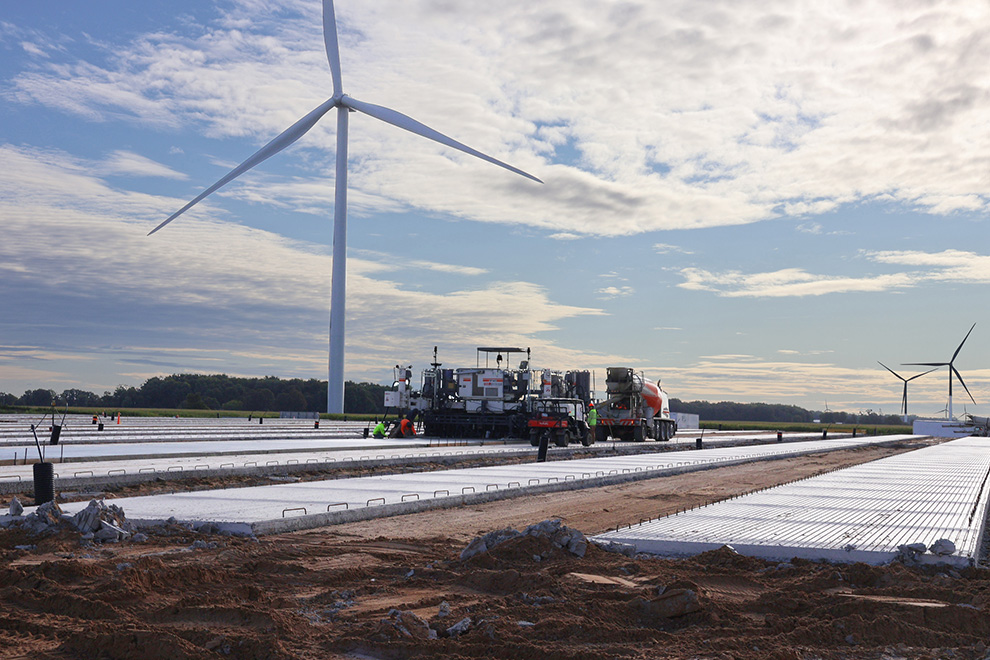
The landscape of the dairy industry is changing like never before. Today, more than 60% of all milk production occurs on farms with more than 2,500 cows. Obviously, the infrastructure needed to support these larger farms has also changed. Case in point: the construction of a 405,000 sq. ft. barn on a large-scale dairy operation in Michigan that, when complete, will house an additional 4,000+ cows. For that project, concrete contractor True Concrete Services, turned to a millimeter-grade GPS solution to ensure that the many pours — and the workflow — were as efficient as possible. The results speak for themselves: the company estimates they saw a 25% savings in both time and labor. Certainly nothing to moo at.

The True Story

A family-owned and operated concrete construction company, True Concrete Solutions (TCS) specializes in commercial/agricultural flatwork, slipform paving, foundation work, and custom screeding. According to Devin Richards, the company — which he co-owns with his father, Sean — will celebrating a quarter century in business in 2026.


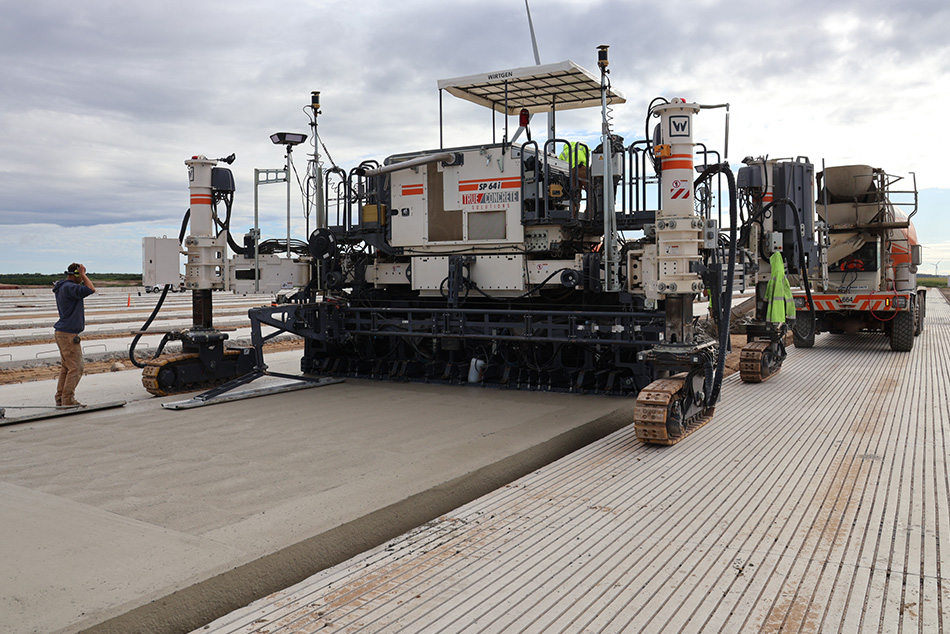
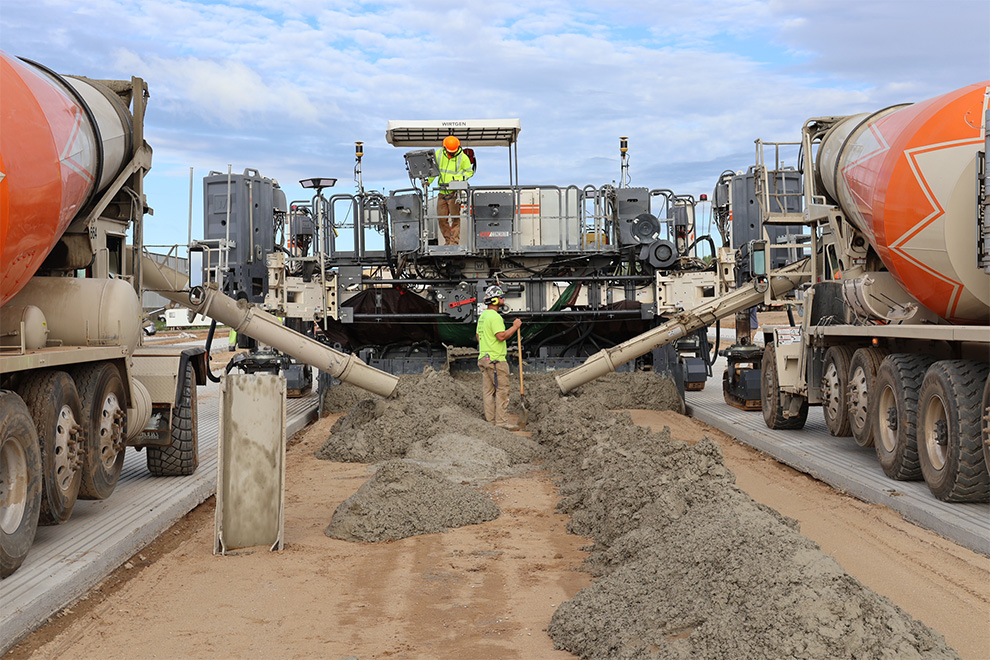
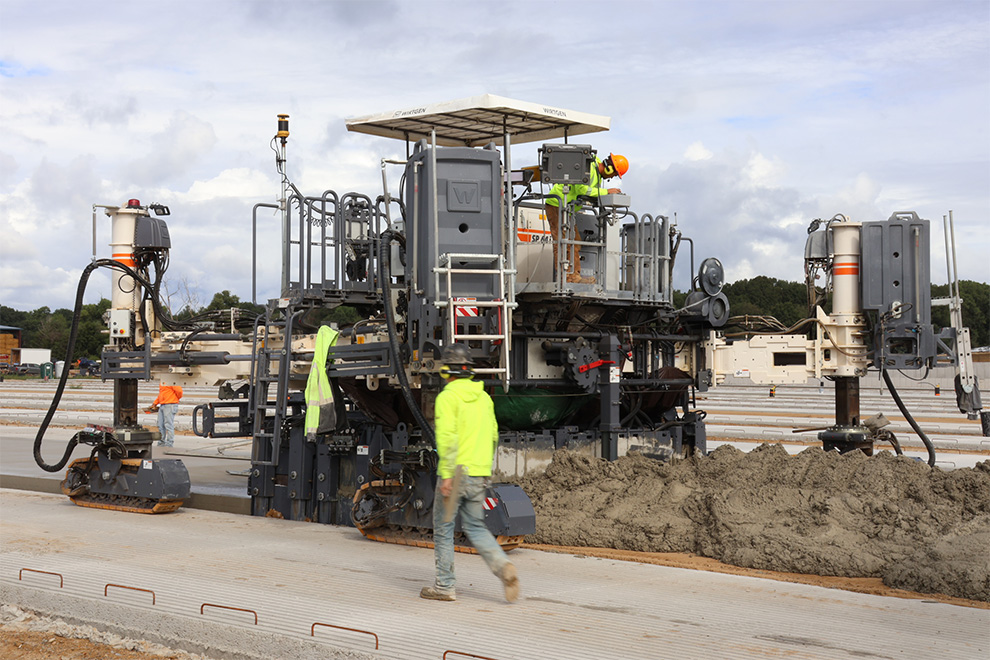
“We employ 13 people, and, as a family-owned business, strive to keep the quality extremely high,” he said. “Our customers appreciate that and have come to expect it. We specialize in flat work but have recently begun focusing on slipform paving as well. For such work, we purchased a Wirtgen SP 64i which we are using for the barn large pours, as well as a Wirtgen SP 33 which we call on for specialty curb applications, particularly in the ag sector.”


Because they service many of the bigger dairies throughout Michigan, he added, they are increasingly finding themselves facing issues of constricting timelines. “For our customers, the faster they can get into the new structure, the faster they can be producing milk and getting their return on investment. We get that and believe the best way to ensure the workflow is streamlined is through automation. So that’s where our focus has been.” 

“For our customers, the faster they can get into the new structure, the faster they can be producing milk and getting their return on investment. We get that and believe the best way to ensure the workflow is streamlined is through automation.”

– Devin Richards
Welcome to the Machine

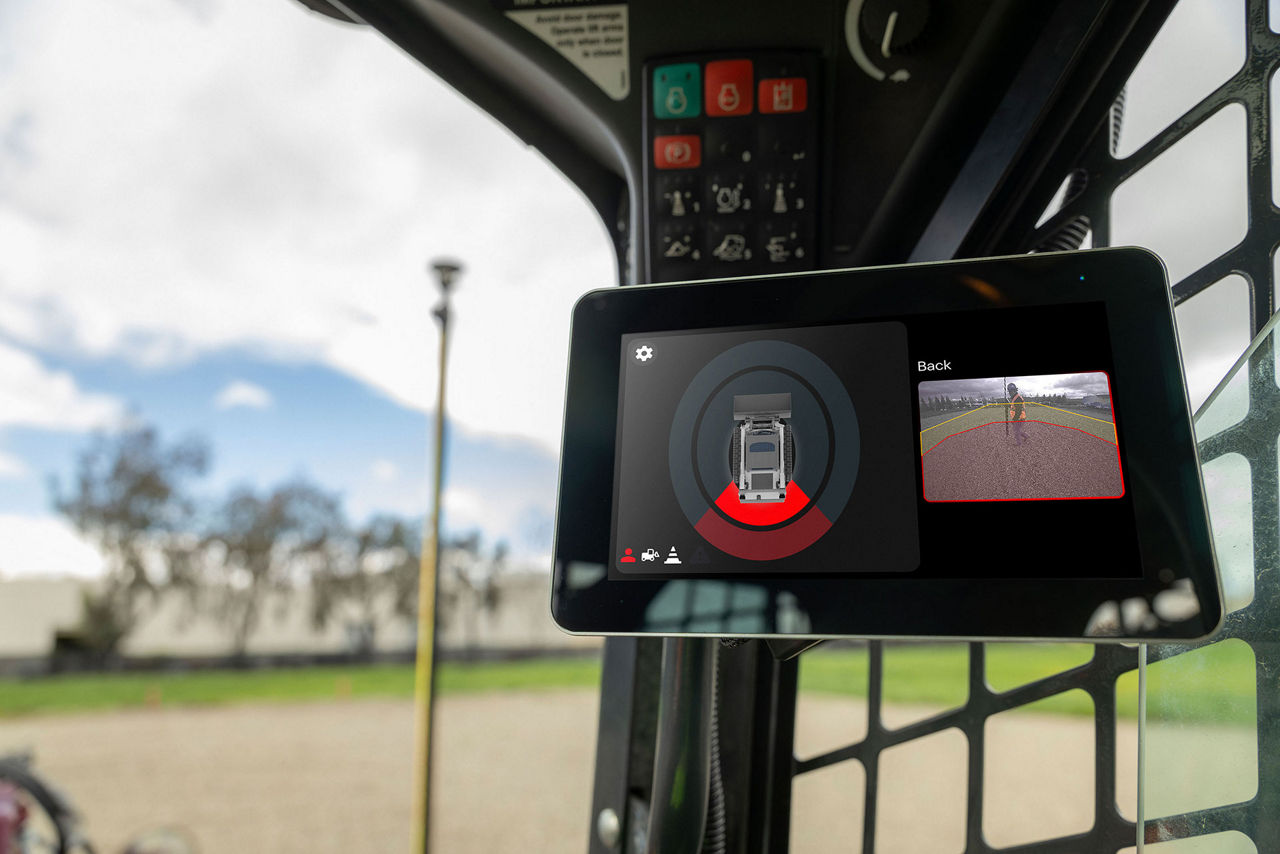
Truth be told, TCS is a fairly seasoned user of automation as a part of its daily workflow. The company has Topcon machine control on its skid steers, an excavator, its Ligchine laser screeds and on the two new Wirtgen machines mentioned above.  According to Richards, they initially relied solely upon an LPS solution — and did so for seven years — but added GPS control within the last couple years.


“For us, the move to GPS was both a labor savings and a workflow issue,” he said. “LPS and the tolerances it provides are great, but the flexibility of GPS is huge for us. With trucks constantly moving around the site and blocking the signal, production can suffer. That’s not an issue with GPS. Then there is the ability to run multiple pieces of equipment off the same system. We sometimes find ourselves having to put trucks on a grade or onto our track lines and it's ideal to be able to have a piece of grading equipment — such as their blade-equipped skid steer — running off the same system at the same time. That not only keeps our yields in check, it also helps ensure the quality of the work.”

The labor advantages of the GPS solution manifest themselves in a number of ways, added Richards. Like most contractors at work today, TCS’s ability to hire good, qualified, committed personnel is a challenge. “We struggle to find good labor — or any labor at all — anymore, so we have turned to an investment-oriented approach,” he said. “Weve been focusing on putting everything back into the company and investing in solid, productive equipment and the best automation available. Doing so, we’ve found, keeps quality high and shortens build times. It’s really worked out well or us.”
At Work in the Barn

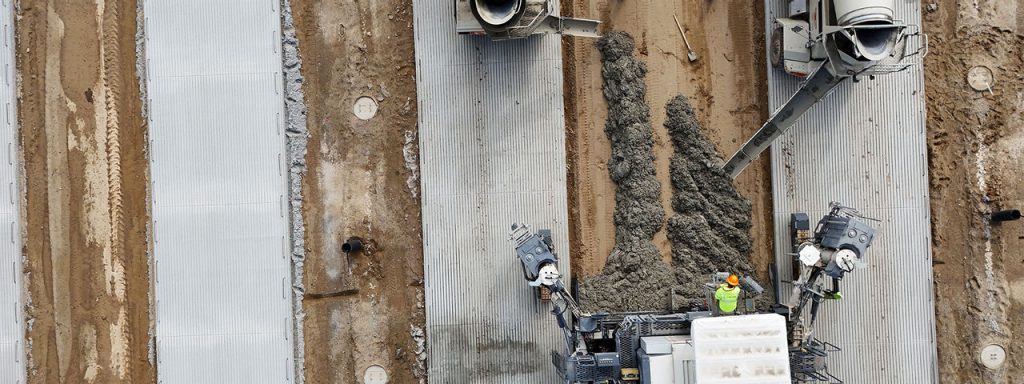
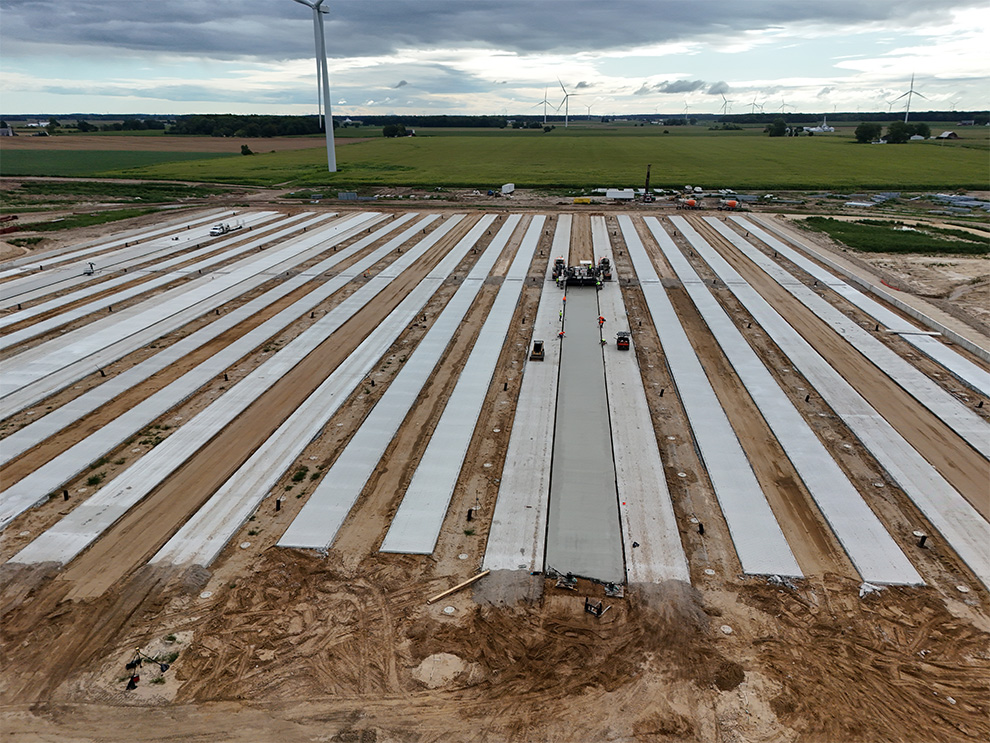
Any mental image one might have of the project TCS is currently undertaking would be quickly dispelled with a look at the ongoing progress. The company has already poured more than two dozen 7” thick silage pads and feed alleys, each more than two football fields in length — in widths ranging from 12’ to 18’. To ensure accuracy in the pours and maintain the tight production schedule, the company turned to the Millimeter GPS paving solution from Topcon Positioning Systems on its slipform paver. The difference between what TCS is doing now and what they previously did is stark, said Richards.


“First of all, in the past, there was no slipform paving but rather a manual setting of forms. Because that was such a time-consuming process, we would generally have to wait until the steel was erected to avoid holding up the other trades. But, because so many sites are clay, mud, etc., that made things difficult for the steel erecting crew. Since going with the Millimeter GPS solution, however, we're not losing time building and tearing down forms, not setting string line, none of that. We've automated the layout and paving processes to such a degree that we can get our part of the job done before the barn goes up, allowing the steel crews to run their lifts on a concrete surface. Not only does the new workflow streamline our work, it speeds theirs up as well and enhances safety.”

The solution to which Richards alludes, provides his crew with all of GPS positioning’s benefits and enhances them with a zone laser reference to improve vertical accuracies. The results have been head-turning for them. “Between going to slip forming, changing how we do our layout and automating the paving function with the Topcon solution, I'd say we probably cut time and labor by 25% to 30%. Traditionally, a project like this would take us a full season: March to December. We expect to knock three months off that schedule — that’s impressive in anyone’s book.”

“Between going to slip forming, changing how we do our layout and automating the paving function with the Topcon solution, I'd say we probably cut time and labor by 25% to 30%. Traditionally, a project like this would take us a full season: March to December. We expect to knock three months off that schedule — that’s impressive in anyone’s book.”

– Devin Richards
Started with the Screed

As mentioned above, TCS’s move into machine automation started with its laser screeds. Richards said they were drawn to the Ligchine laser-guided approach both for its ability to automate that facet of its operation and for the software that powers it.


“When we were originally looking into Ligchine, in addition to the performance and efficiency they offered, I liked that fact that, when it came to the LPS, we could depend on solid support from AIS Positioning Solutions,” he said. “They have multiple locations across the state with techs who are always there when we need them and offer classes every winter so we're able to get our newer guys trained up on the equipment fairly quickly. We currently have a Topcon HiPer HR base and rover kit for the GPS-based work and GT 803s for LPS.”


He added that, choosing Topcon for the LPS control solution also played nicely into their decision for its slipform pavers. “When we were looking at the Millimeter GPS options, we felt that the proven ease-of-use of Topcon’s MAGNET Field and Pocket 3D software could really benefit us — and it has.”

The Concrete Facts

TCS will place more than 11,000 yards of concrete this season alone at the Michigan dairy barn site; when weather wasn’t an issue, they averaged pours of between 600 and 800 yards per day. A fleet of seven trucks from ready-mix supplier Consumers Concrete Corporation, working from an onsite batch plant, continuously put down concrete in advance of the slipform paver. The mix design is a 4,000 p.s.i. mix with a mid-range water reducer which, by removing as much water as possible, mitigates shrinkage and cracking.


“We are also adding 3 lbs. of structural synthetic fiber per yard which, by replacing rebar, keeps labor demands down and allows us to expedite these projects much faster.”


Richards said that the automation of their workflow has changed things in a number of ways, including helping them reduce material overages or shortages — a headache on any job, but one that is magnified on a project of this size.

“An overage or shortage on a nearly 700’ run is no longer measured in yards, it’s measured in trucks,” he said. “We’ve eliminated that. And our ability to keep those tolerances tight also gives peace of mind to our customers. We can show them the data and say: “When you core this, if spec says 7” inches, that’s what it is — it's not 7 ¼” it’s not 6 ¾”.  And while an increase in speed often results in a decrease in quality, that’s not been the case at all — if anything, it has gotten better. Being family owned and operated, efficiency and quality are what will allow us to thrive. We've been able to obtain both of those, largely with the addition of the Topcon solutions.”

True Concrete Solutions is looking to have its portion of the dairy farm project wrapped up in December 2025.
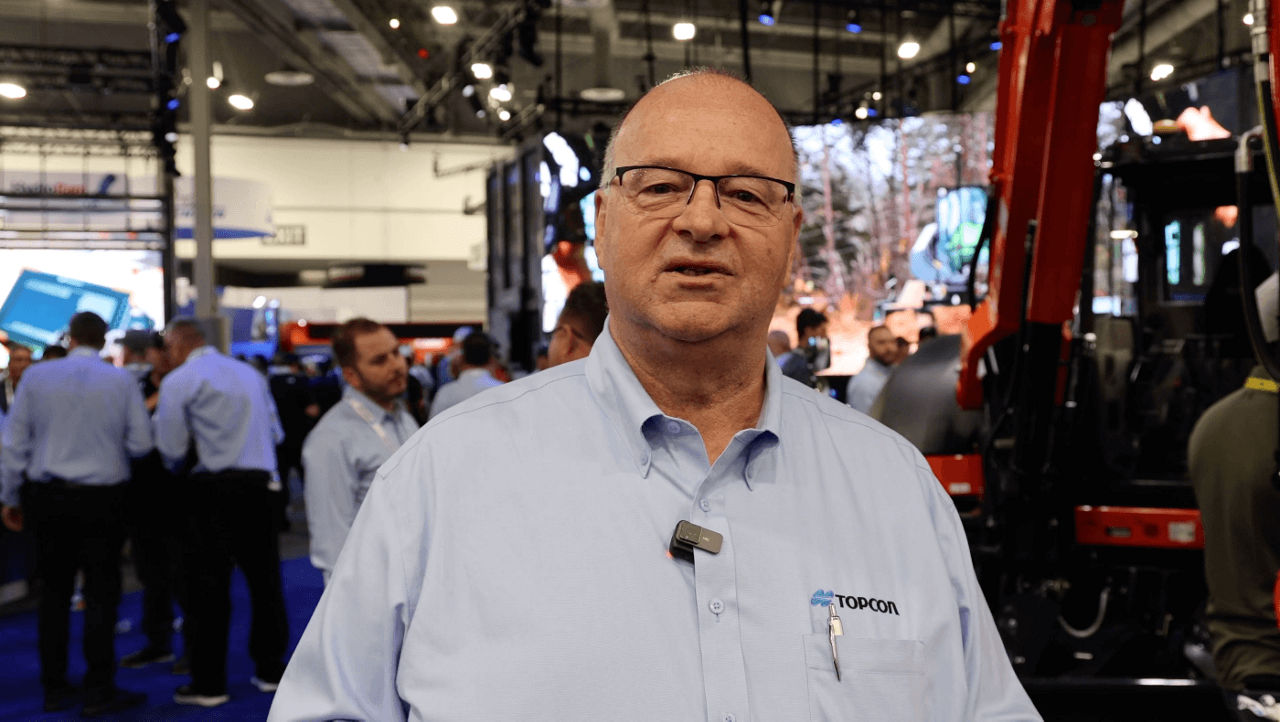
“Being family owned and operated, efficiency and quality are what will allow us to thrive. We've been able to obtain both of those, largely with the addition of the Topcon solutions.”

– Devin Richards

Related articles