Looking for your apps? Click the account icon in the upper right corner of the page.

Project Runway

Using enhanced GPS-based milling technology, The Crisdel Group completes Newark runway project 20% early. 

Hero Image

When an aviation crisis at Newark Liberty International Airport reared its head this spring, travel into and out of the nation’s busiest airline corridor was severely impacted. Issues with air traffic control staffing and electronic systems were compounded by an inopportune closing of one of the airport’s runways for reconstruction, resulting in a dramatic spike in flight delays and cancellations, as well as overall safety concerns by the traveling public. While general contractor The Crisdel Group, in charge of the reconstruction effort, could do nothing about the ATC problem, it certainly could do its part to help alleviate the runway-related scheduling issues. To do so, it used an innovative GPS-based solution for the milling facet of the paving operation, a move that helped the company complete the time-critical project 13 days ahead of schedule.
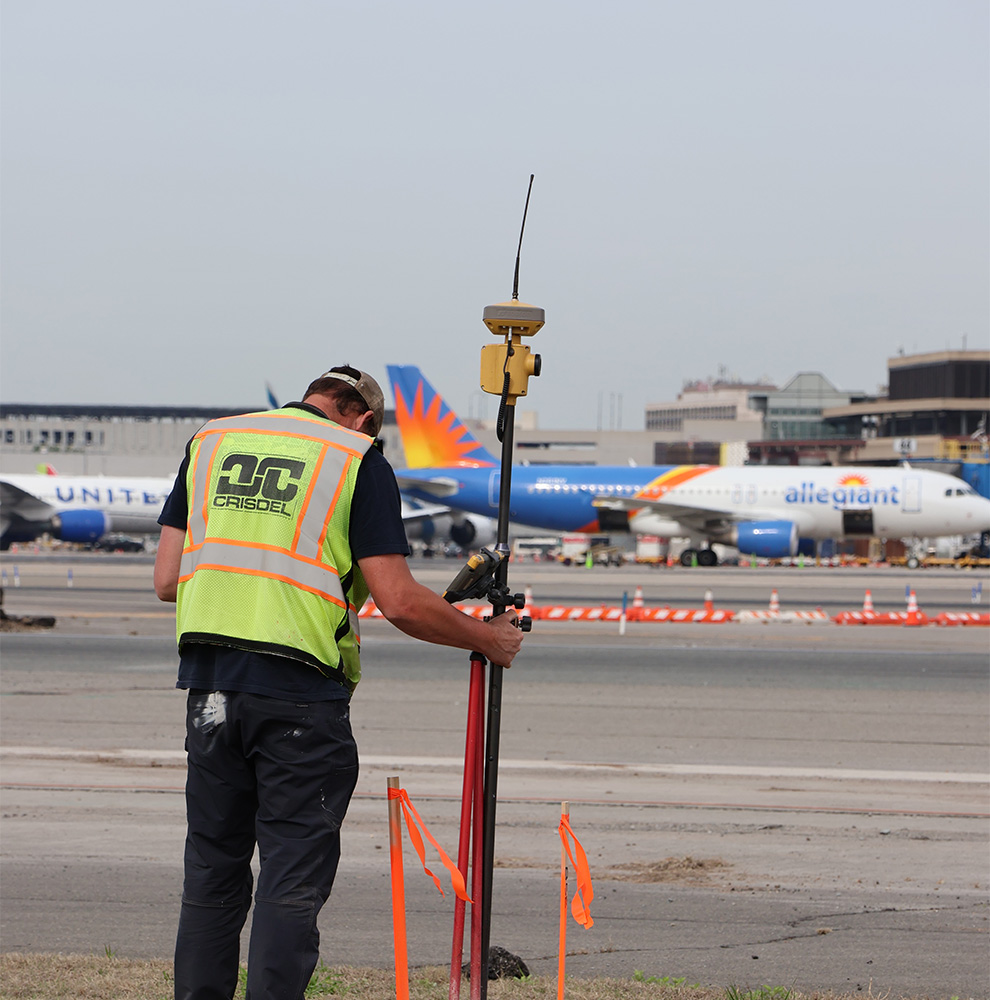
The 411 on EWR

As the second-busiest airport in the New York City triad of JFK, Newark, and LaGuardia, Newark Liberty International Airport (airport code EWR) boasts a rich history. Built on 68 acres of marshland in 1928, EWR was the first major airport to serve the New York metropolitan area. It quickly established its forward-thinking credentials with the construction of the nation’s first air traffic control tower, first airport-based weather support station, and first passenger terminal. Repurposed in 1941 in support of the war effort, it was reopened in 1946 and six years later resumed its innovative ways with the installation of runway lights, thereby becoming the first airport to allow nighttime operation.


Today, the Newark, New Jersey-based facility handles nearly 49 million passengers annually and serves 50 domestic and international carriers out of three major terminals. And one need look no further than the newly redeveloped, $2.7 billion Terminal A for proof that progress has not abated.

Major Upgrades

On the runway side of things, EWR features two, 11,000 ft. north-south structures (4L and 4R) which undergo regular rehabilitation to ensure smoothness and durability for the roughly 460,000 flights that come into and leave each year. According to Chris Walsh, one of Crisdel’s surveyors, the job, officially known as “Runway 4L-22R Rehab,” included a range of upgrades.


“In addition to milling/paving more than 467,000 sq. ft. of runway and taxiway, there were updates for the edge lights and stop bar lights, airfield signage was converted to LED lighting, and the electrical infrastructure was improved,” he said. “All that work was done by Con El, a local electrical contractor. Preliminary work for us began in March but really took off on April 15th with a 60-day total runway shutdown.”


With runway 4L/22R being EWR’s busiest runway for departing flights, the impact on airport operations was significant, lending added urgency to Crisdel’s already tight schedule. In light of that, the company looked for the most expeditious way to get the job done and determined that streamlining the milling workflow was the answer.

“Without Millimeter GPS, the workflow would have been much different out here”.

- Chris Walsh
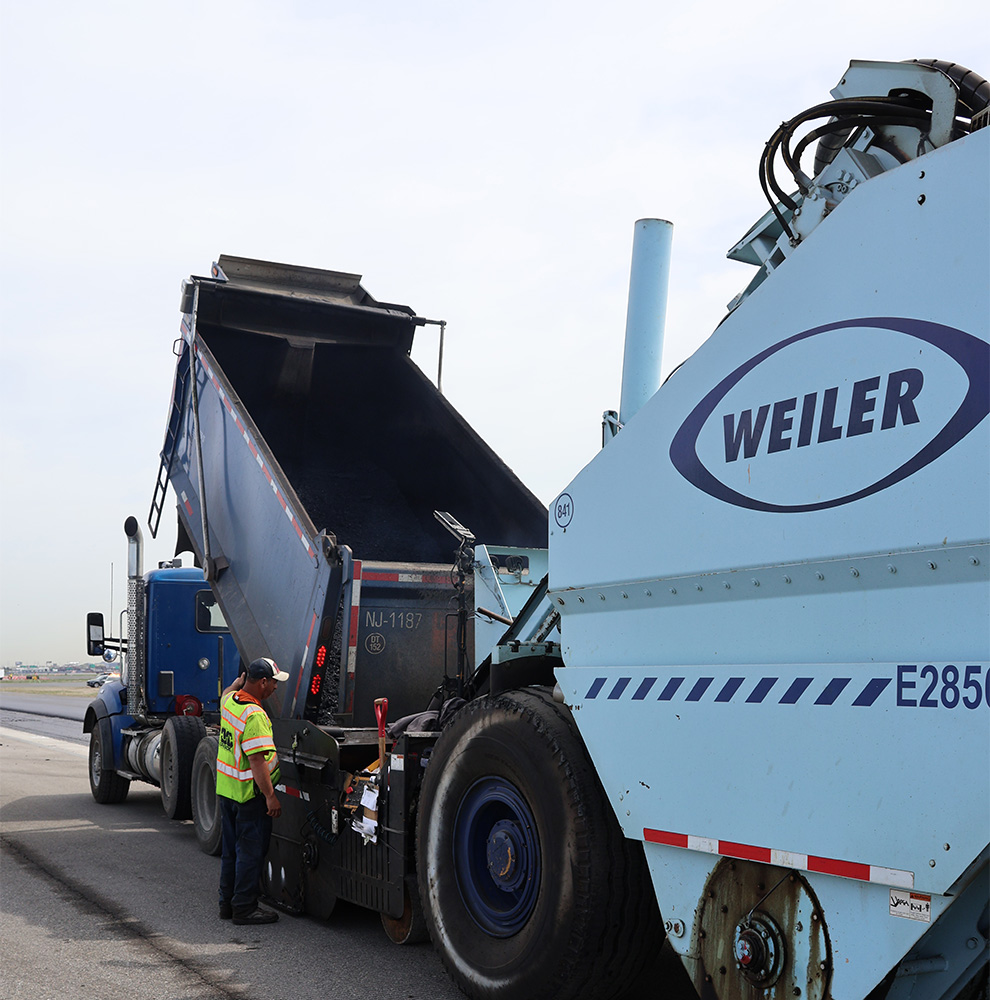
Put Away the Paint

The means to that end, Crisdel found, was Topcon Millimeter GPS, a solution that utilizes a series of laser transmitters to establish a grade control zone, which is acquired by a receiver on the mill. That info is then decoded to establish a precise, millimeter grade, vertical position anywhere on the jobsite and set the depth of the milling drum accordingly. According to Walsh, it changed the complexion of the project right from the outset.


“Without Millimeter GPS, the workflow would have been much different out here,” he said. “We would first have had to go out and, using a rod/data collector, lay out what’s called a ‘grid on grade,’ in which we create a 25’ grid, then mark each segment of the grid with the proposed milling depth. Obviously, that is a labor-intensive, time-consuming process. Instead, a digital file with all that info was loaded into the control box of the milling machines — we have two mills working out here — and the mill knew the precise depth to cut. It was a huge improvement in productivity, easily shaving several days off the process.”

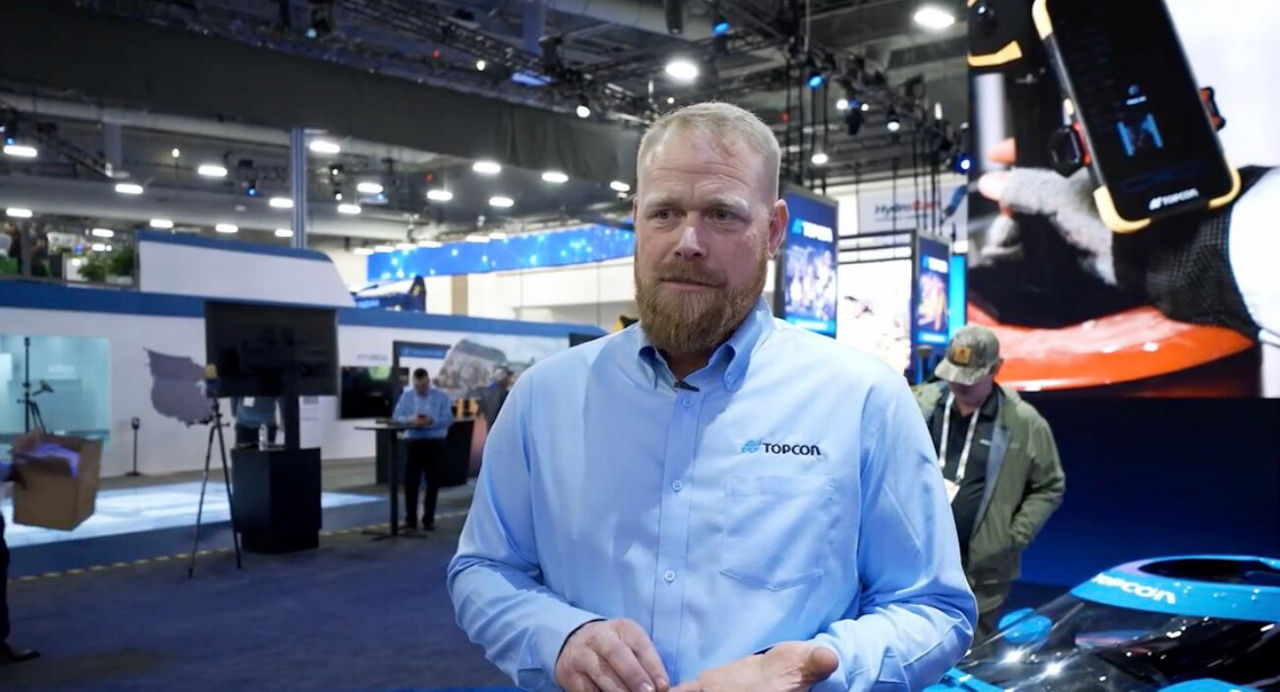
Jim Cleary, the owner of Cleary Machinery, the area Topcon dealer, said that, while he’s outfitted many customers over the years who used the Millimeter GPS solution, he was impressed by the level of confidence Crisdel placed in it.

“Most customers I’ve worked with — even though they are relying upon the millimeter system — will still paint numbers on the ground,” he said. “Not so for Crisdel. They did all the milling without any paint on the surface. They had complete trust in the system and have been rewarded for it. The accuracies they got early on — 100% within ½” and 90% within ¼” — bear that out.”
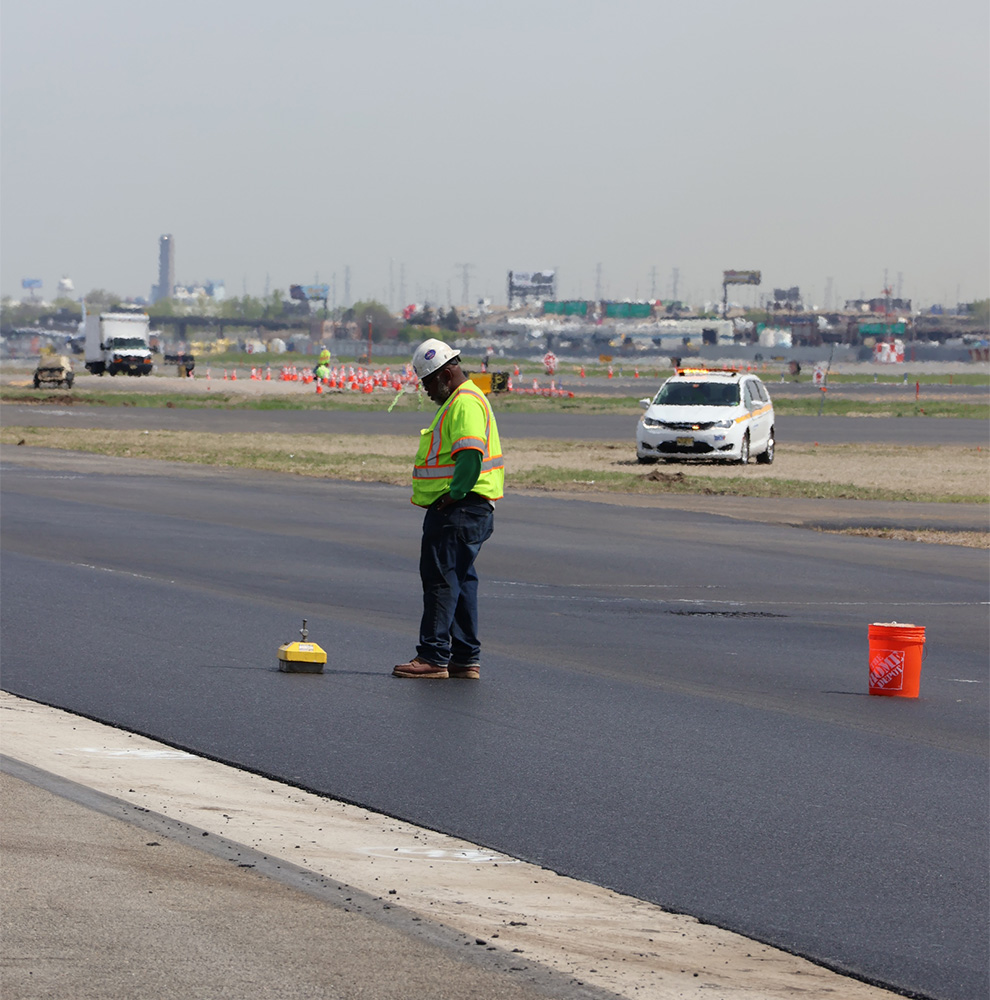
A Numbers Game

The FAA-sanctioned specifications for both milling and paving were understandably tight. For the milling facet of the project, Crisdel committed to a “Mill to Provide” of 3 inches. Similar to what is often called variable-depth milling, it essentially means that milling needs to be 3” below the determined finished grade. 


“It is not just a full-on 3” run,” said Walsh, “We were provided a TIN file by our survey company, with varying grades from every part of the project. We simply told our mills — a pair of Wirtgen W250i units — to cut to -.25, which is 3” below finished grade, and they adjusted. It worked out great; the numbers we got were far better than even The Port Authority specified.”

"A digital file with all that info was loaded into the control box of the milling machines — we have two mills working out here — and the mill knew the precise depth to cut. It was a huge improvement in productivity, easily shaving several days off the process.”

- Chris Walsh
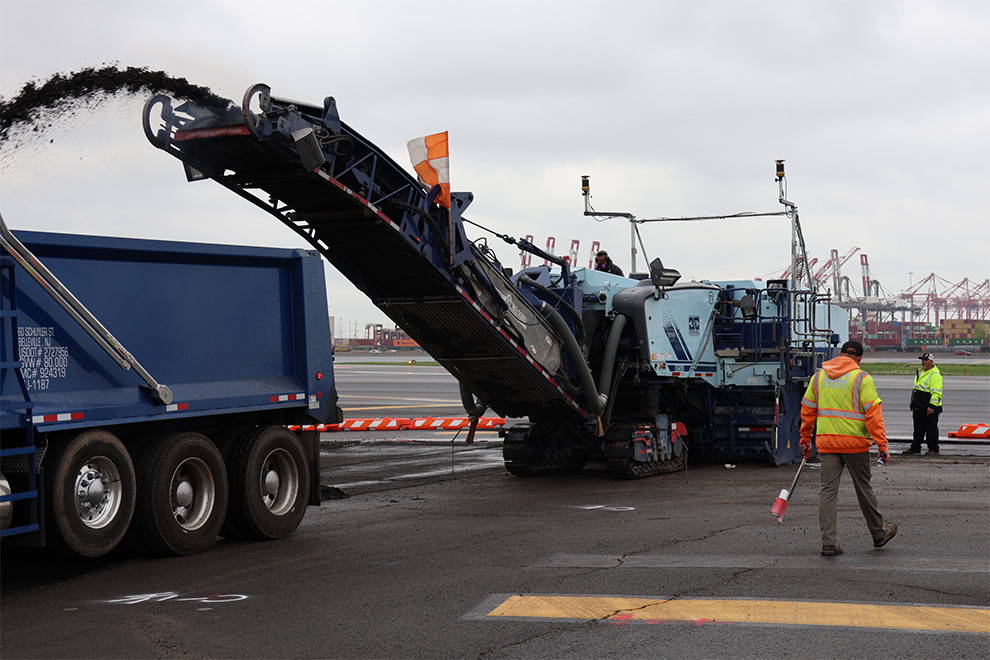
Being There

Perhaps the only thing more constant than solid performance at EWR during the rehab project, was the presence of Cleary. The 30+ year veteran equipment dealer with an extensive history of airport work prides himself on ensuring that his customers have access to his expertise.


“It’s no secret that the Topcon solutions I bring to my customers represent some of the finest equipment in the business,” he said. “But things happen on jobsites and when they do, I like to be available to ensure that any impact on my customer and their operation is minimal. So, it sometimes appears as if I’m always onsite. In fact, I‘ve had customers tell me, ‘It’s almost like you’re part of the crew.’ That, to me, is the highest praise anyone could ask for.”


Crisdel’s Walsh will attest to the value of support they get from Cleary and his team.  “Jim is always on point, and if we need something, he’s there,” he said. “It really doesn’t matter: time of day, if he’s in the middle of anything, whatever — he’ll get us the solution or the answer that we need. That’s huge for us.”

Upgrade is in Order

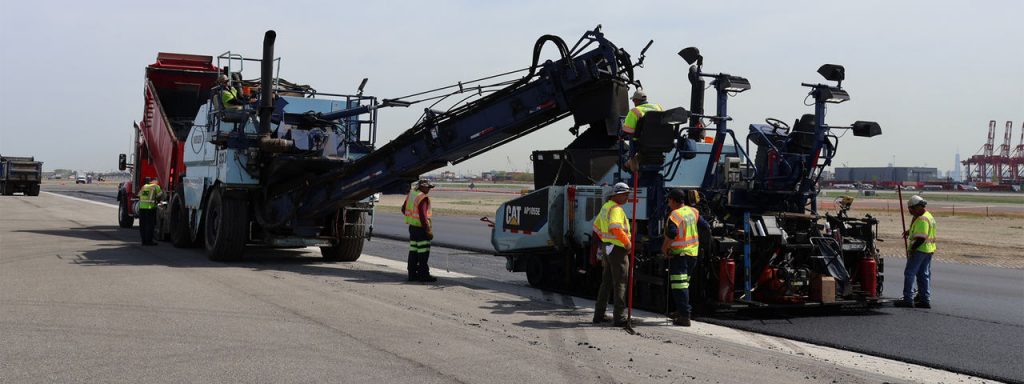
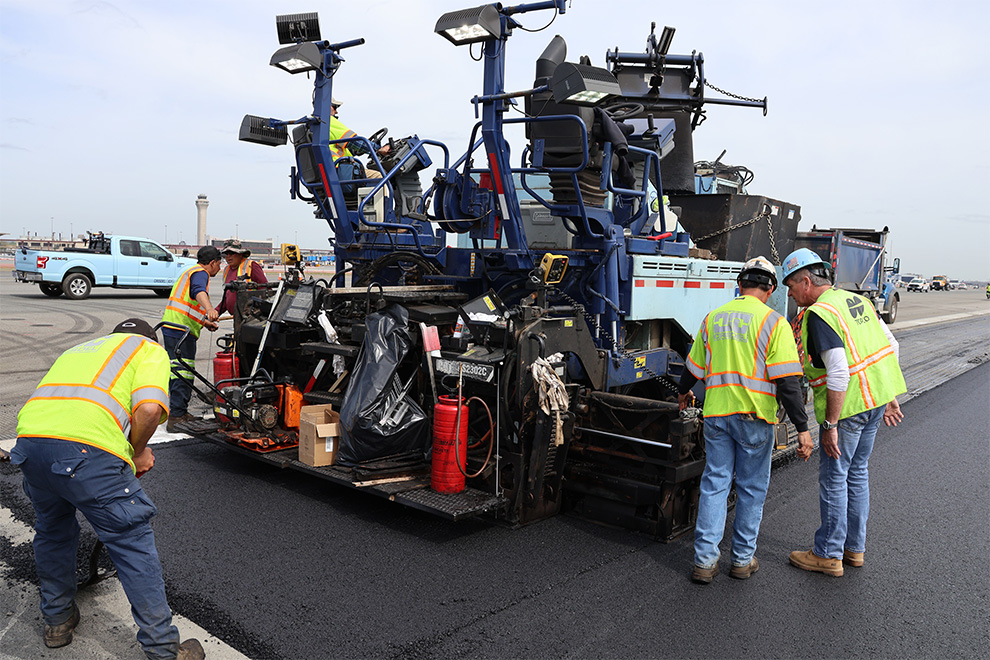
As alluded to above, Crisdel’s milling success lent itself to excellence in the paving portion of the Runway 4L-22R Rehab. Using a pair of Cat AP-1055E pavers, each equipped with an upgraded paving solution, the company achieved smoothness and solid production rates.


“Shortly before the runway job kicked off, Crisdel was still running an older Topcon paving solution,” said Cleary. “Wanting to take advantage of current technology without investing in an entirely new system and having redundant components, we talked, and I was able to connect them with an upgrade program offered by Topcon. That program allowed them to retain part of their older system while benefiting from Topcon P-32 automation technology — it was a perfect fit.”


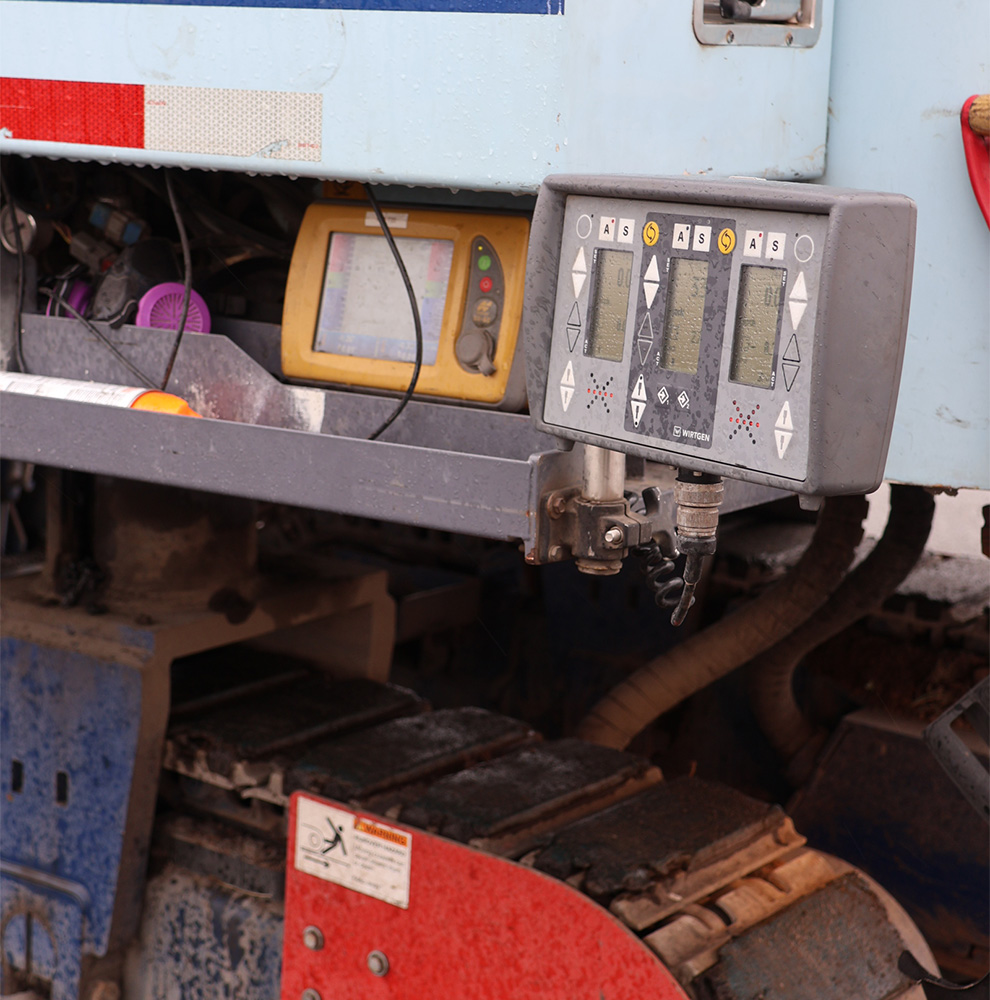
Crisdel used the 2D paving solution — a P-32 screed control box used in conjunction with sonic trackers — to get the aforementioned required smoothness results. The system’s high-contrast control box shows the screed man the slope and elevation information on one or both sides of the screed, then follows through with fully automatic screed control. 

Compaction at EWR was handled by Crisdel’s fleet of high-frequency vibratory tandem rollers. Though hampered by a series of rainy days which can impact the paving schedule, Crisdel still managed regular production rates of 2,000 tons per paver/per day.

“I attribute a lot of our success here to the outstanding team that put in long days to get the job done as quickly as we did,” said Walsh. “But there’s no denying that the ability to create such an accurate milled surface played a key role as well. This runway was last rehabbed in 2014, so the need for an upgrade was definitely there. We will be leaving them with an excellent product.”

"They had complete trust in the system and have been rewarded for it. The accuracies they got early on — 100% within ½” and 90% within ¼” — bear that out.”

- Jim Cleary

Green Runways

A well-used Chinese proverb states that: “A journey of a thousand miles begins with a single step.” Similarly, success in achieving sustainable practices as they relate to airline travel is the result of many small efforts. Keeping airport runways and taxiways in peak operating condition plays well to that mindset. Studies show that aircraft ground operations, taxi/runway movements being one of those, account for nearly 8% of total aircraft emissions — several times the amount of all other airport emissions combined. In addition, when companies like Crisdel use technology like Topcon Millimeter GPS to dramatically improve the overall milling/paving operation of a project, as they have, less time is spent on the runway (in this case more than 20% less time) and fewer trucks are needed to haul asphalt in and out, reducing vehicle emissions. And since better application of the asphalt generally yields reduced material volumes, demand on area asphalt plants — themselves significant contributors of greenhouse gases — are also lessened. Everybody benefits.
Related articles