Two of the most vexing challenges faced by today’s construction professional are the ability to ensure excellence in grading and dealing with ongoing design changes. While the advent of machine control helped alleviate some of the dependence upon grade stakes, blue tops, and the like, increasingly tightening specs remain a concern. And, while the use of removeable storage like thumb drives has helped facilitate the transfer of design data, making that happen can still be still a time-consuming practice. In an effort to deal with both issues, TTC Construction, a Yakima, Washington-based general contractor, automated the majority of their fleet and turned to a telematic solution. In doing so they dramatically reduced the stress of grading by stake and streamlined the process by which design changes can now be made. Given that, TTC might very well stand for “They’re Totally Committed.”
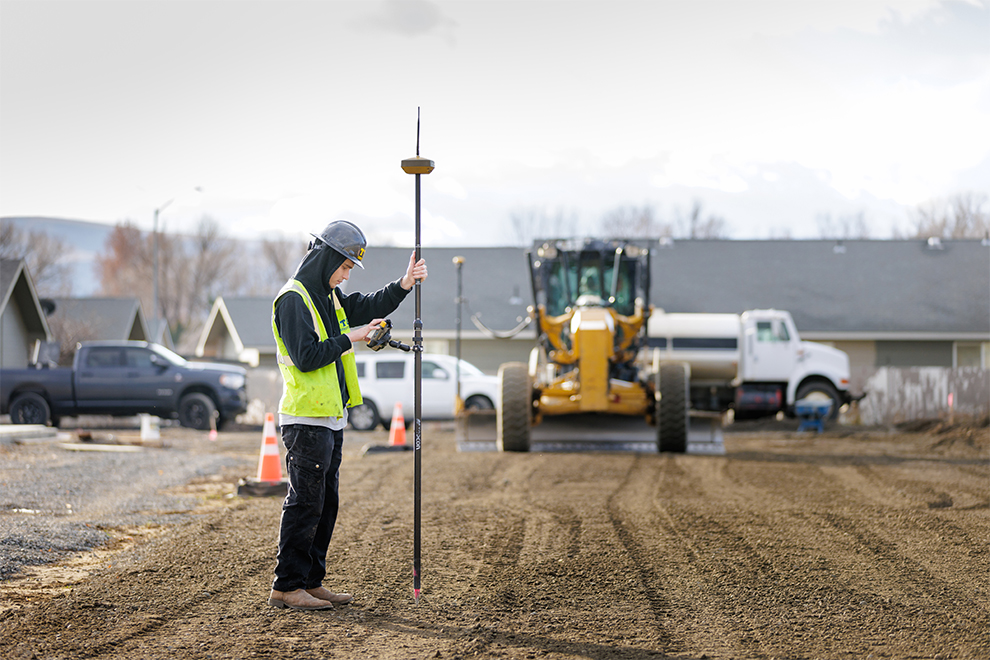
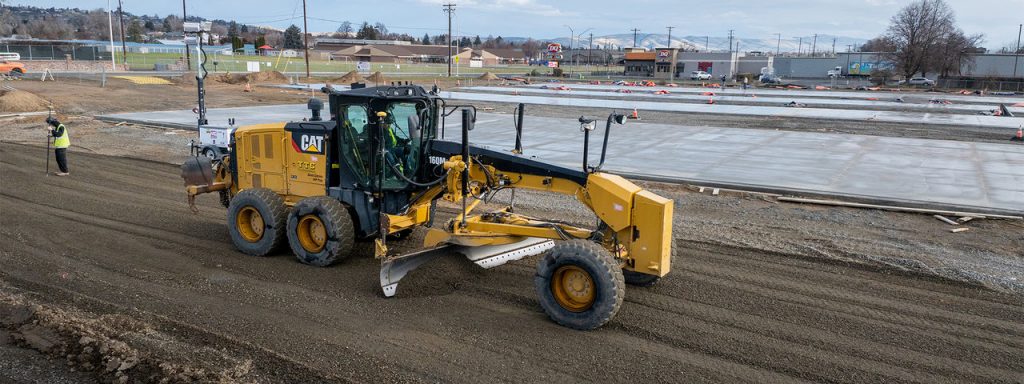
Today, TTC is a huge proponent of GNSS-based solutions, employing four sets of Topcon HiPer GNSS bases and rovers; several excavators, a scraper, two Cat D5 dozers, and a pair of 160M graders, all utilizing Topcon control and several of which are running off the company’s MC-X platform.
“Mind you, all the solutions are impressive,” added Schroder. “But the machines running MC-Max seem to hold tolerances tighter and provide an even greater level of accuracy. So, we’re steadily switching to that platform.”
"With the new technology, we can do a job in one month now that, five years ago, would have taken us two to three months. It’s easily doubled our production.”
– Dusty Brownell
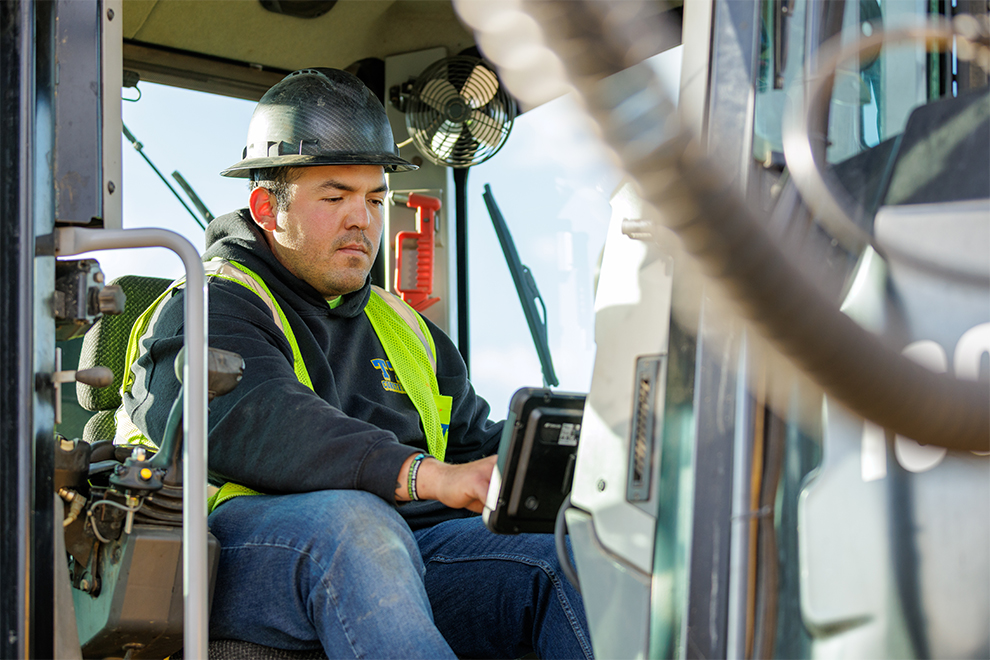
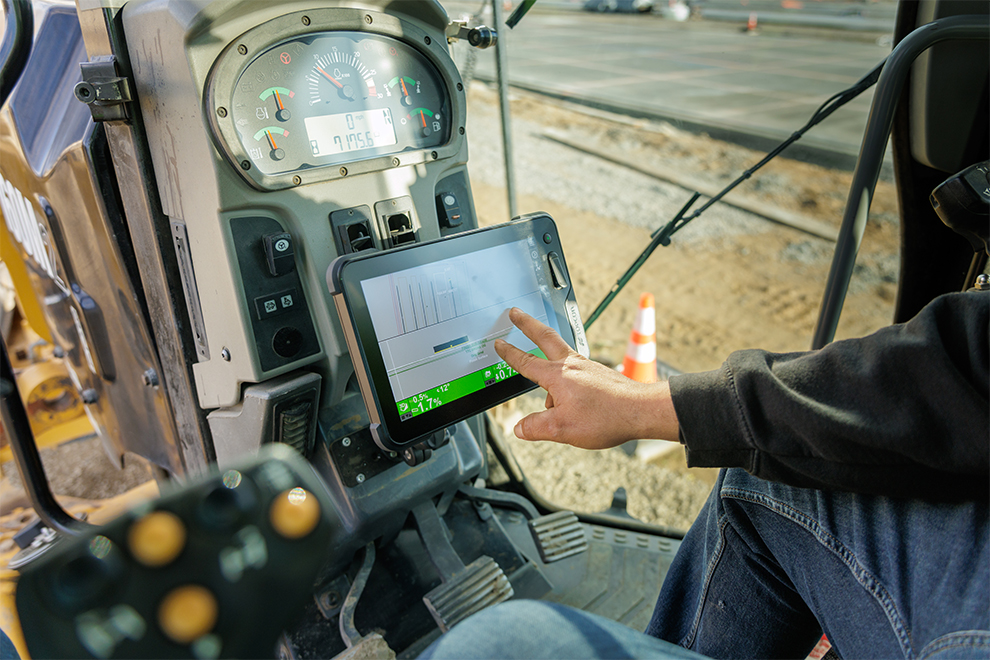
"Today almost our full fleet runs Sitelink3D; we wouldn’t work without it.”
– Tyler Schroder
Working “Site” Unseen
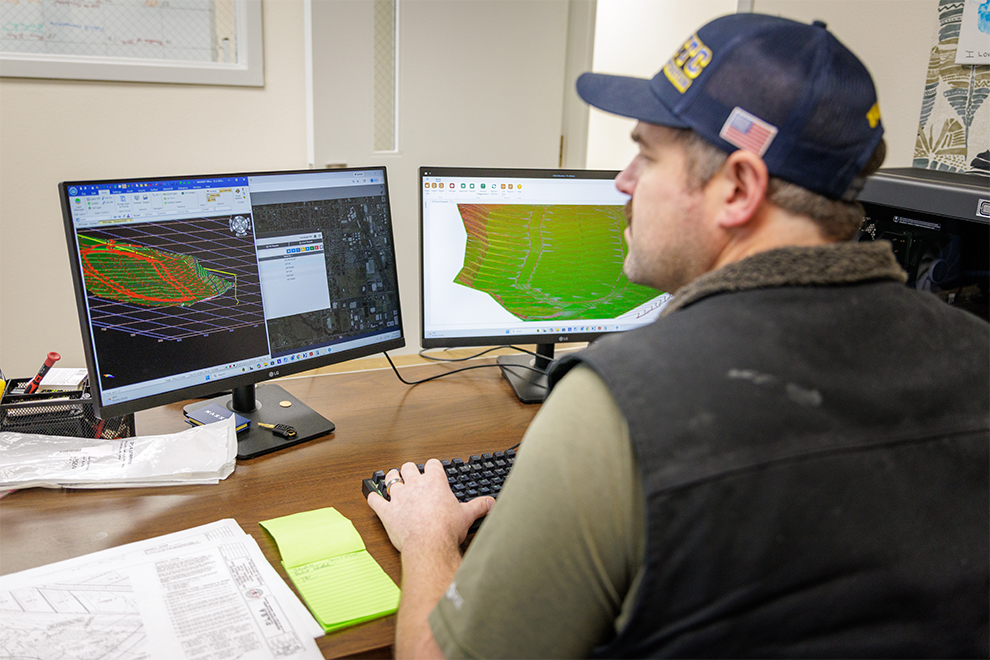
The second challenging aspect of work today — implementing design changes — has vexed contractors seemingly since time immemorial. One can imagine workers on the Pyramids at Giza muttering under their breath as the scale of the project grew or the structure’s angle was modified. For TTC — and for most contractors still today — implementing changes used to entail a trip back to the office to grab a new set of modified plans. That practice was eventually replaced by a project manager/superintendent driving out to the job site, sometimes a good distance, with a thumb drive containing the updated digital model, then manually loading it into the machines.
“While a far cry from what we did years ago, that still left a crew at the site waiting for the new data, which impacts production,” said Schroder. “About a year ago, Jerry White from Topcon Solutions Stores’ Kent, Washington, branch, gave me a demonstration of Sitelink3D, Topcon’s telematics solution — I immediately saw the benefits it could bring to our operation. Today almost our full fleet runs Sitelink3D; we wouldn’t work without it.”
"The Topcon solutions have allowed us to progress as a company much quicker than many others in the area — that’s good for us and our customers.”
–Tyler Schroder
Undoing a Wrong
Although implementing design changes is a huge benefit the solution provides, the ability to remotely troubleshoot issues has proven equally valuable to TCC’s operation. According to Schroder, that benefit recently came into play at their current job.
“We brought a grader to the site that we had previously set up with the sonic tracker on the left side of the blade, which meant we had a separate machine profile for that antenna,” he said. “When it got out here and was put to work, however, it was reading between three and four feet off because the antenna was now on the other side. It can sometimes be hard for an operator to identify the problem or articulate it to me. Sitelink remedies that problem.”
From the office, Schroder was able to identify the antenna issue, switch the machine profile back and re-calibrate it. “Once we did that, they were back in business,” he said. “And I did all that without having to go out there. So, the savings in time meant productivity — for both that machine and for me — didn’t suffer.”
He added that the solution also helps build up an operator’s confidence, especially those who are new. “They know that, if they have any questions, they can just give me a call, and I’ll be there with them in a virtual sense. They can see my mouse moving around the screen, and I can point any critical things out to them. Showing them seems to make a much more lasting impact, so we’re not having the same conversation, making the same phone call over and over.
“I can't imagine working without Sitelink3D,” he continued. “Just the sheer amount of time it saves me is worth every single penny it cost. In our industry, time is money, so the faster we can get the information out to the site, process it, and fix any issues that arise, that's time saved — and production maintained. The Topcon solutions have allowed us to progress as a company much quicker than many others in the area — that’s good for us and our customers.”